
Seeking Alpha Review 2024:vale la pena investire per gli investitori?
Divulgazione: Questo post potrebbe ricevere un compenso dai partner elencati tramite partnership di affiliazione, senza alcun costo per te. Ciò non influenza le nostre valutazioni e le opinioni sono nostre. Scopri di più qui.
Se desideri una recensione approfondita e dettagliata di Seeking Alpha, sei nel posto giusto.
Per prima cosa scoprirai cos'è Seeking Alpha, in che modo Seeking Alpha può apportare vantaggi a te e ai tuoi investimenti, quindi entreremo più nel dettaglio, ad esempio:
- I pro e i contro di Seeking Alpha
- Come utilizzare alcuni degli strumenti di Seeking Alpha
- Come Seeking Alpha può aiutarti a far crescere la tua ricchezza
Puoi diventare un membro base di Seeking Alpha gratuitamente, iscriverti al piano Premium di Seeking Alpha (che è quello che utilizzo io) oppure puoi utilizzare il piano Pro.
Pronto a vedere se Seeking Alpha è la migliore piattaforma di ricerca sugli investimenti per te?
Entriamo subito nel vivo.
Valutazione complessiva:
Voto 4,8 su 5
Strumenti personalizzati
Contenuti di alta qualità
Analisi approfondita delle azioni
Può creare dipendenza
Interfaccia complessa
Potrebbe essere travolgente
Seeking Alpha è una piattaforma di ricerca sugli investimenti progettata per investitori di livello intermedio e avanzato che desiderano informazioni economiche, imparziali e quantitative.
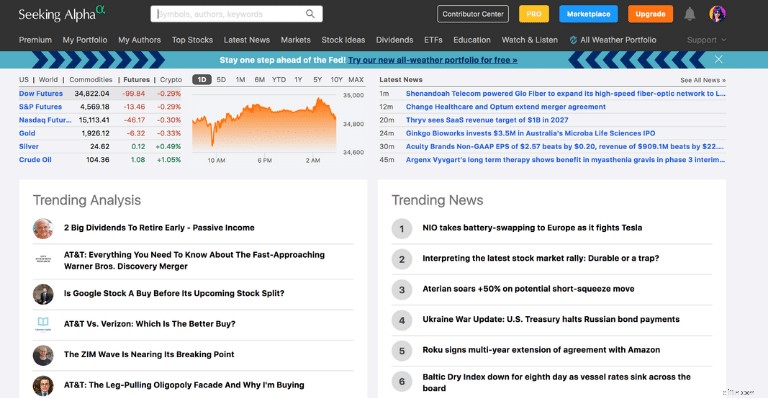
Alcuni strumenti che puoi iniziare a utilizzare se ti iscrivi a Seeking Alpha , includono:
- Tracciatore di portafoglio virtuale personalizzato
- Collega e analizza il tuo portafoglio attuale
- Accesso esclusivo all'analisi delle azioni di tendenza
- Tracciatore personalizzato della performance dei singoli titoli
Dalla nascita di Seeking Alpha nel 2004, la piattaforma ha attirato oltre 20 milioni di utenti mensili.
Cosa significa "Cercare l'alfa"?
Ecco qualcosa di interessante che potresti non sapere sul nome Seeking Alpha:
Il termine "alfa" non è solo la prima lettera dell'alfabeto greco, ma veniva utilizzato anche dai greci per rappresentare il numero 1.
Il termine “alfa” è in realtà anche un termine finanziario ed è espresso con il seguente simbolo:
Ecco cosa significa il termine "alfa" in termini finanziari:
L'alfa di un portafoglio viene generalmente espresso come un numero positivo, un numero negativo o uno 0.
Ecco cosa significherebbero questi numeri:
2%
Il portafoglio ha sovraperformato il mercato del 2%
0%
Portafoglio performante in linea con il mercato
-2%
Il portafoglio ha sottoperformato il mercato del 2%
Quindi, in tutta realtà, la piattaforma Seeking Alpha ha un gioco di parole molto intelligente con il suo titolo.
Seeking Alpha rappresenta il nostro desiderio di costruire un portafoglio in grado di sovraperformare il mercato.
Come funziona la ricerca dell'alfa?
L'obiettivo finale di Seeking Alpha è aiutare gli investitori fondamentali a condividere informazioni e idee con investitori che la pensano allo stesso modo sulla piattaforma.
Una volta che ti iscrivi e diventi membro di Seeking Alpha, ti verrà dato accesso esclusivo ad articoli e newsletter scritti da investitori fondamentali esperti e accreditati.

La più alta credenziale relativa agli investimenti che qualcuno può ottenere (a parte forse un dottorato di ricerca) è la certificazione CFA.
Anche se non tutti gli autori possono avere una designazione CFA – il che va benissimo – anche quelli che portano le lettere CFA sono ottimi candidati da cui imparare.
Anche se utilizzi il piano gratuito di Seeking Alpha, puoi comunque avere accesso a:
- Commenti approfonditi sui tuoi titoli preferiti
- Accesso agli strumenti proprietari di classificazione delle azioni di Seeking Alpha
- Analisi di stock pubblicata e approfondita (fino a 5 articoli gratuiti al mese)
Dai un'occhiata solo ad un frammento dei numerosi articoli pubblicati quotidianamente:
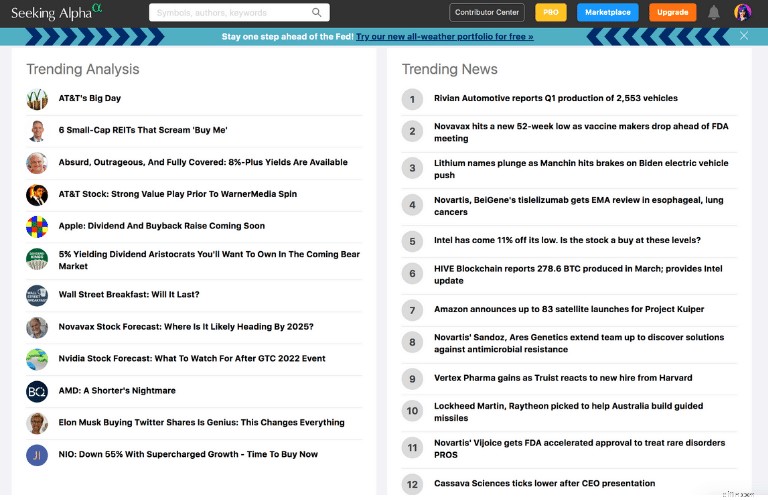
Infatti, Seeking Alpha vanta più di 7.000 autori attivi ed esperti che pubblicano più di 10.000 recensioni approfondite ogni mese.
Questi autori approfondiscono le azioni , esaminando i dati finanziari di ciascuna società e fornendo la propria opinione, se quel titolo debba essere un:
- Acquista
- Vendi
- Tieni premuto
- Vendita forte
- Buon acquisto
Ora, oltre a imparare dai tuoi colleghi investitori professionisti su ciascun titolo, Seeking Alpha ti dà anche la possibilità di fare le tue ricerche.
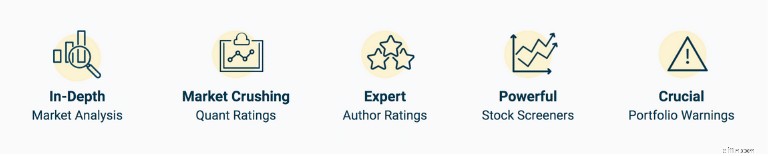
Alcuni strumenti di ricerca accessibili a tutti gli abbonati Premium e Pro includono:
- Schermo ETF personalizzato
- Analisi del portafoglio personalizzato
- Tracciatore personalizzato delle prestazioni delle azioni
Entreremo più in dettaglio su questi strumenti più avanti nell'articolo (quindi continua a leggere!).
L'idea principale qui è che Seeking Alpha ti offre il meglio di entrambi i mondi:puoi imparare e interagire con i tuoi colleghi, oltre a ricevere esperienza pratica quando si tratta di ricerca sugli investimenti.
Cerco i pro e i contro di Alpha
Diamo uno sguardo d'insieme ai pro e ai contro di Seeking Alpha (per le opzioni a pagamento):
Pubblicità minima o nulla
Costoso se sei un investitore occasionale
Accesso a newsletter, interviste e articoli giornalieri esclusivi
Meno copertura sulle criptovalute rispetto ad altri settori
Analisi quantitativa approfondita delle azioni
Si concentra sulla ricerca sugli investimenti e non automatizza i tuoi investimenti
Personalizza gli avvisi di stock (riceverai notifiche push)
Usabilità/interfaccia possono creare confusione
Gli articoli in crowdsourcing ti danno la possibilità di interagire direttamente con gli autori
La maggior parte degli articoli e delle azioni si concentrano principalmente sugli Stati Uniti (e talvolta sul Canada)
Puoi personalizzare molti degli strumenti di Seeking Alpha
Potrebbe essere complesso se sei un investitore passivo (senza trading giornaliero)
Cerco la valutazione complessiva Alpha
Prima di continuare a leggere, controlla le mie valutazioni per ciascuna delle seguenti 6 categorie:
Approfondimenti sugli investimenti
⭐️⭐️⭐️⭐️⭐️
Strumenti di investimento
⭐️⭐️⭐️⭐️⭐️
Servizio clienti
⭐️⭐️⭐️⭐️⭐️
Usabilità
⭐️⭐️⭐️⭐️⭐️
Costo
⭐️⭐️⭐️⭐️
Per fornire qualche dettaglio in più sul motivo delle mie valutazioni, dai un'occhiata alla mia ripartizione di seguito:
- Approfondimenti sugli investimenti – I lettori ricevono tantissime informazioni dalle newsletter quotidiane alle valutazioni azionarie quantitative, degli analisti di Wall Street e degli autori di Seeking Alpha
- Strumenti di investimento – Come membro Premium o Pro, hai accesso a tanti diversi strumenti di Seeking Alpha. Tuttavia, potrebbero essere un po' difficili da comprendere se sei un investitore occasionale
- Servizio clienti – Ho parlato personalmente con 3 diversi rappresentanti del servizio clienti di Seeking Alpha, tutti estremamente cordiali, reattivi e corretti con le loro informazioni. Dalla mia esperienza, il team del servizio clienti di Seeking Alpha è molto professionale
- Usabilità – Per chi è un investitore principiante, i diversi strumenti di Seeking Alpha potrebbero sembrare un po’ travolgenti. Se sei un investitore di livello intermedio o esperto e sai cosa stai facendo, Seeking Alpha è molto facile da usare
- Costo – Non ottieni molto con la versione ad accesso limitato (ovvero gratuita), ma ottieni molto per i tuoi soldi se ti iscrivi alla versione Premium ($ 19,99 al mese). La versione Pro, secondo me, ha senso solo se sei un professionista o se sei seriamente interessato agli investimenti attivi ($ 199,99 al mese)
Finora sono piuttosto impressionato da Seeking Alpha.
Informazioni sulla ricerca dell'alfa
Seeking Alpha è stata fondata nel 2004 da David Jackson.
David ha lavorato come analista di ricerca azionaria e tecnologica presso Morgan Stanley durante la bolla tecnologica, ricercando azioni e scrivendo le sue scoperte.
Fu durante questo periodo che David si rese conto che esisteva un conflitto di interessi intrinseco se le principali banche di investimento pubblicavano le loro ricerche su determinati prodotti di investimento, soprattutto se le principali banche vendevano questi prodotti di investimento.
Perché una grande banca d’investimento dovrebbe pubblicare un documento di ricerca su un prodotto scadente che la banca stessa vende?
È così che è nato Seeking Alpha.
Ecco alcuni dettagli in più che dovresti sapere su Seeking Alpha:
Anno di fondazione
2004
Posizione della sede centrale
Ra'anana, Israele
Utenti mensili
20 milioni+
Visualizzatori mensili
40 milioni+
Autori attivi mensili
Oltre 7.000
Articoli pubblicati mensilmente
Oltre 10.000
Costo mensile
– Accesso limitato =$ 0
– Premio =$ 19,99
– Pro =$ 199,99
Chi dovrebbe utilizzare Seeking Alpha
– Investitori intermedi
– Investitori avanzati
– Commercianti giornalieri
Tipo di contenuto
– Podcast
– Contenuti video
– Contenuto scritto
Funzionalità straordinarie
– Rendiconto finanziario
– Trascrizioni delle chiamate sugli utili
– Notifiche di stock personalizzate
– Analisi approfondita da parte di esperti
– Sistema di valutazione delle azioni trasparente
– Grafici di confronto delle prestazioni delle azioni
Disponibilità
– iPad
– Scrivania
–Android
– iPod touch
– iPhone (iOS 12.2 o successivo)
Servizio clienti
– Telefono
– Foro
Orari del servizio clienti
Dal lunedì al venerdì, dalle 8:00 alle 16:00 EST
Disponibilità per Paese
Internazionale
Sebbene Seeking Alpha sia disponibile per un pubblico internazionale, devo notare che il focus principale della ricerca sugli investimenti della piattaforma è sugli Stati Uniti e sul Canada.
Alla ricerca dell'usabilità e dell'interfaccia Alpha
Sono un grande fan dell'interfaccia del sito web di Seeking Alpha.
Personalmente, penso che Seeking Alpha sia molto facile da usare, intuitivo e faccia anche un buon lavoro mostrando le informazioni in modo organizzato.
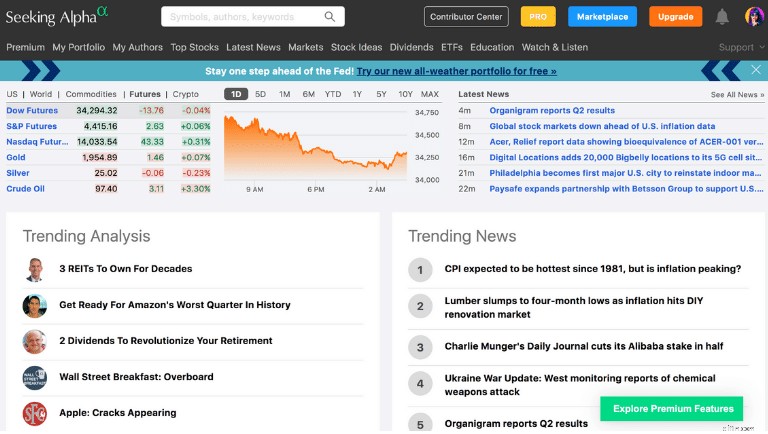
Ora, l'unico feedback costruttivo che vorrei avere è che per gli investitori principianti – e anche per gli utenti intermedi – le informazioni su Seeking Alpha potrebbero non essere sempre reperibili in modo intuitivo.
Ad esempio, se stai cercando i principali ETF sui mercati emergenti, probabilmente non sapresti dove cercare.
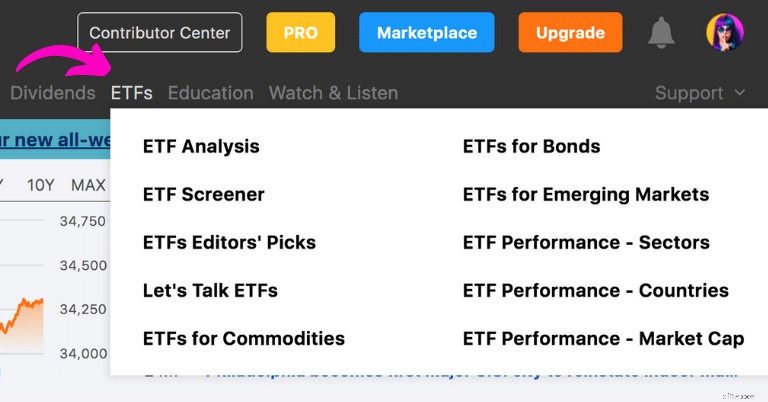
L'unico posto logico in cui cercherei gli ETF sui mercati emergenti sarebbe nella scheda ETF, ma non ci sono ancora ulteriori informazioni sugli ETF sui mercati emergenti.
In realtà, per trovare i migliori ETF sui mercati emergenti, dovresti fare clic su "ETF Screener" e "ETF Performance – Sector".
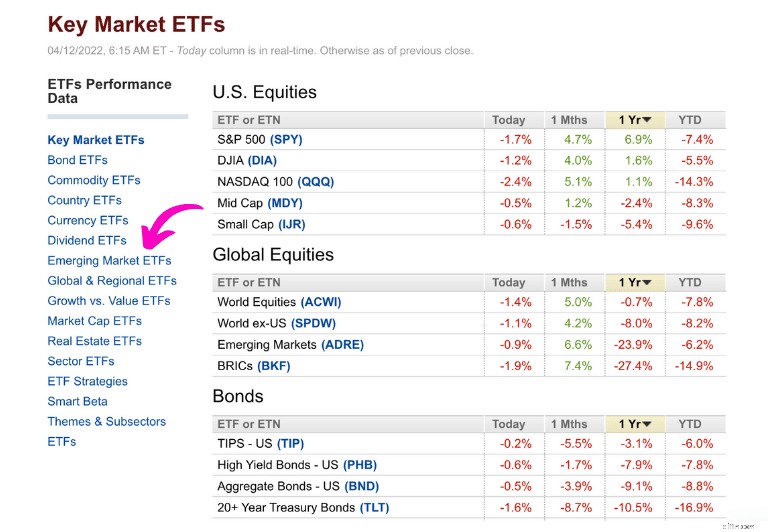
Da lì, dovrai fare clic sulla barra degli strumenti a sinistra per ordinare effettivamente la categoria ETF (in questo caso, mercati emergenti) che stai cercando.
Nel complesso, Seeking Alpha ha creato una fantastica piattaforma di ricerca fondamentale per ogni investitore.
Probabilmente avrai solo una piccola curva di apprendimento prima di acquisire piena familiarità con la piattaforma e il suo funzionamento.
Cerco di piani e prezzi Alpha
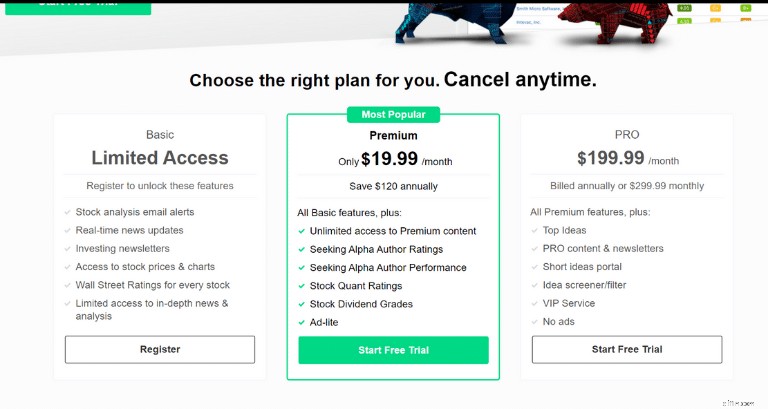
Seeking Alpha ha 3 piani, 2 dei quali sono versioni a pagamento:
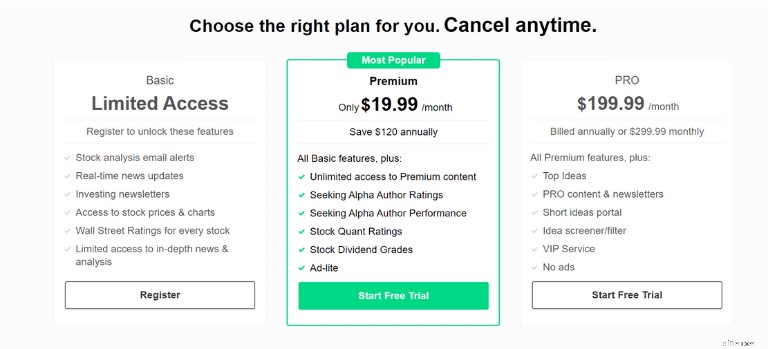
Utilizzo il piano Premium e sono molto soddisfatto delle sue funzionalità e delle sue caratteristiche.
Ecco cosa puoi aspettarti quando apri un conto con Seeking Alpha:
Costo minimo
$ 0 [Piano ad accesso limitato]
Costo massimo
$ 199,99/mese [Piano Pro]
Metodi di pagamento
– PayPal
– Carta di credito
Tieni presente che i tuoi piani Premium (o Pro) verranno fatturati annualmente per coprire i costi mensili di $ 19,99 (Premium) o $ 199,99 (Pro).
Altrimenti pagheresti $ 29,99 al mese (Premium) e $ 299,99 al mese (Pro).
Ecco una breve panoramica di ciò che ottieni con ciascun abbonamento Seeking Alpha:
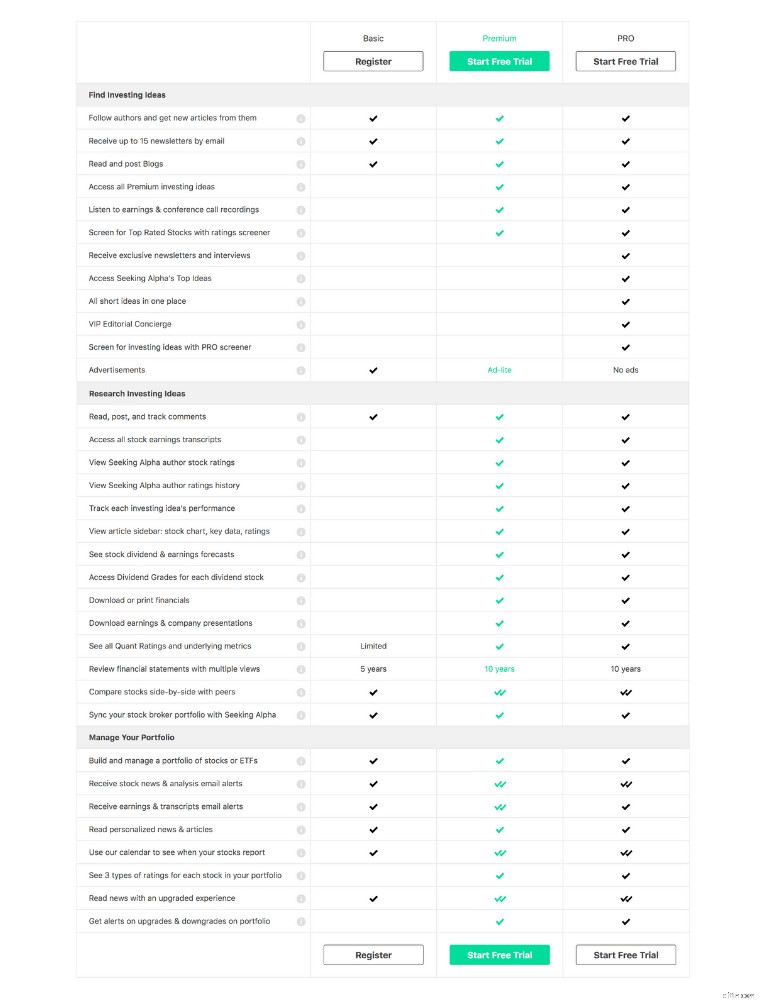
La buona notizia è che puoi iniziare una prova gratuita di 14 giorni con il piano Premium e anche con i piani Pro.
In genere, dovresti ricevere un'email di promemoria qualche giorno prima della fine del periodo di prova, ma ho letto diversi reclami secondo cui le carte di credito venivano addebitate proprio al termine del periodo di prova.
Continua a leggere il passaggio seguente, perché ti spiegherò più in dettaglio ogni servizio e cosa ottieni in cambio del tuo denaro.
Chi dovrebbe abbonarsi ai piani a pagamento Seeking Alpha?
Se un piano Seeking Alpha vale il costo, dipende davvero da te e dai tuoi obiettivi.
Di seguito, ho suddiviso un semplice grafico per mostrarti quale piano sarebbe probabilmente il migliore se:
Leggi gli articoli ogni giorno
✔️
✔️
Interagisci con gli autori
✔️
✔️
Avvisi e-mail
✔️
✔️
Nessuna pubblicità
✔️
Goditi Analytics
✔️
✔️
Desideri un servizio VIP
✔️
Desideri contenuti esclusivi
✔️
Sei un commerciante giornaliero
✔️
✔️
Il denaro non è una preoccupazione
✔️
Personalmente penso che il piano Premium sia perfetto per chiunque sia una persona normale e voglia:
- Interagisci con persone che la pensano allo stesso modo
- Scopri di più sul lato tecnico dell'investimento
- Prendi decisioni informate sul mercato azionario
A meno che tu non sia un vero commerciante giornaliero o gestisca una piccola impresa e abbia bisogno di un ulteriore tocco esclusivo, direi che il piano Premium è probabilmente il miglior rapporto qualità-prezzo, considerato quello che stai spendendo.
Cerco la performance di selezione dei titoli di Alpha
Sebbene battere costantemente il mercato sia quasi impossibile, Seeking Alpha ti dà sicuramente il vantaggio di sovraperformare il mercato.
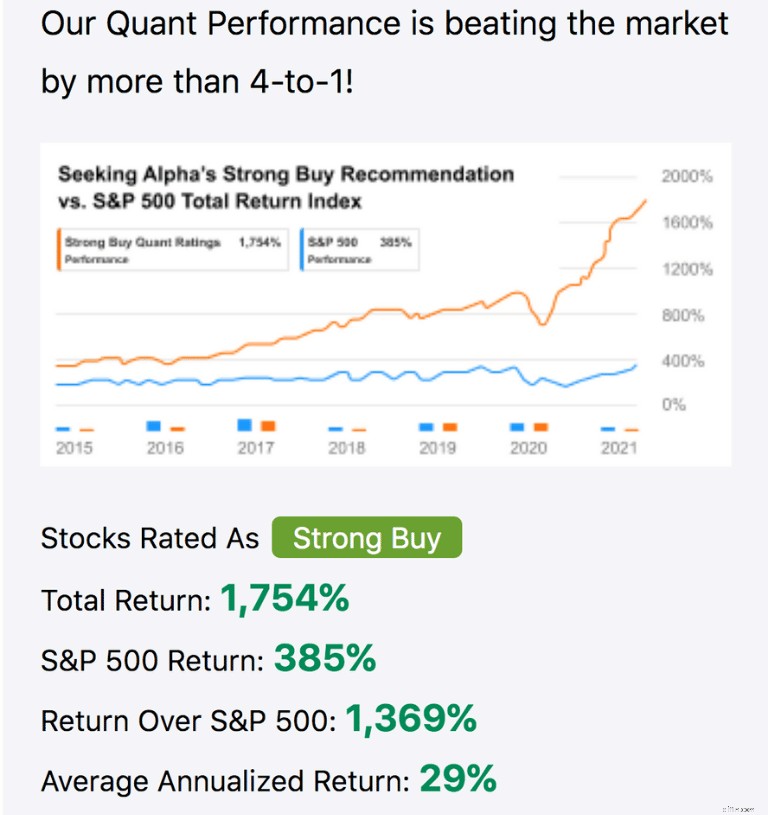
Infatti, dal 2010, l'algoritmo quantitativo di Seeking Alpha ha sostanzialmente sovraperformato l'indice S&P 500, battendolo 9 volte su 10.
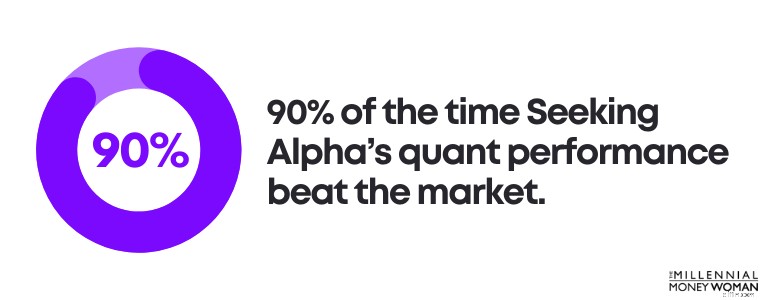
I titoli "Molto rialzisti" hanno reso l'1.754% mentre l'S&P 500 ha reso solo il 385%.
Quindi, come puoi accedere a uno strumento che aumenta notevolmente le tue probabilità di sovraperformare il mercato?
Iscrivendoti al pacchetto Seeking Alpha Premium .
Pensala in questo modo:
- Inizi a investire $ 10.000 nel 2010 e non paghi ulteriori contributi di investimento
- Avresti $ 139.344 in più se avessi utilizzato le raccomandazioni azionarie "Very Bullish" di Seeking Alpha rispetto all'investimento nell'S&P 500
Tieni presente che le prestazioni passate non indicano necessariamente le prestazioni future.
Cerco il piano di accesso limitato Alpha
Se non sei pronto a spendere soldi per Seeking Alpha e vuoi semplicemente iscriverti al piano gratuito, dai un'occhiata a questa sezione, dedicata al piano ad accesso limitato:
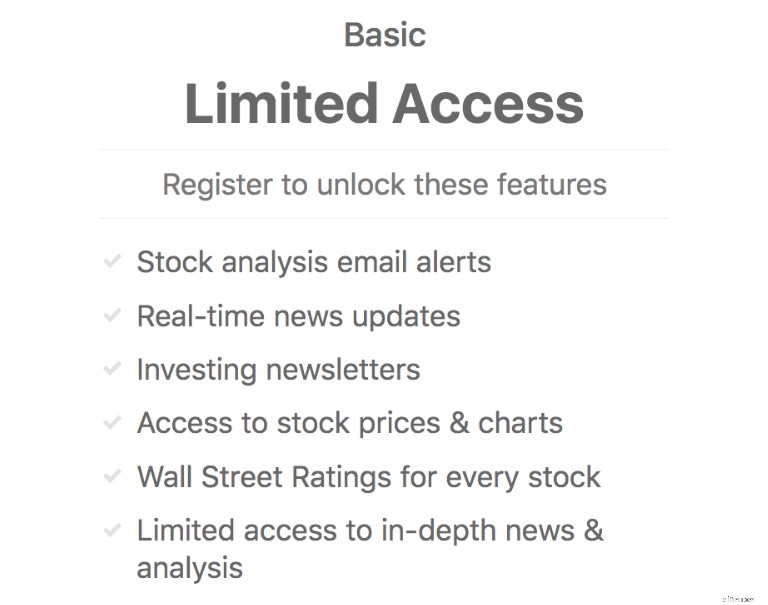
Con il piano ad accesso limitato, alcune cose che puoi fare includono:
- Ricevi fino a 15 newsletter via email
- Accedi alle trascrizioni e ai rapporti sulle entrate
- Segui e interagisci con gli autori di Seeking Alpha
- Accedi fino a 5 articoli Seeking Alpha al mese
- Collega il tuo portafoglio personale con Seeking Alpha (per l'analisi delle tue azioni)
Alcuni svantaggi del piano ad accesso limitato includono:
- Sarai esposto a più annunci
- Non hai accesso alle analisi degli esperti
- Non puoi accedere a tutte le metriche azionarie sottostanti
- Hai accesso solo ai rating di Wall Street
- Non è possibile accedere a tutte le valutazioni quantitative delle azioni
- È possibile rivedere i rendiconti finanziari solo per un massimo di 5 anni (non 10)
Se sei interessato e desideri di più, valuta la possibilità di iscriverti a uno dei piani a pagamento di Seeking Alpha (il Premium o il Pro).
Cerco il piano Alpha Premium
L'aspetto interessante del piano Seeking Alpha Premium (e Pro) è che puoi iniziare un periodo di prova gratuito di 14 giorni per testare il piano prima di impegnarti finanziariamente.
Puoi annullare il periodo di prova in qualsiasi momento per assicurarti di non ricevere l'intero importo (cosa che Seeking Alpha può fare se non annulli prima della fine del periodo di prova).
Se ti è piaciuto il periodo di prova del piano Premium, puoi pagare il piano Premium in 3 modi:
Piano mensile
$ 29,99/mese
Piano annuale
$ 239 (o $ 19,99 al mese, come pubblicizzato)
Piano triennale
$ 540 (o $ 14,99/mese)
Sembra che il caso predefinito per Seeking Alpha preveda l'addebito anticipato dei premi per l'intero anno (quindi $ 239 per il piano Premium).
Uno dei maggiori vantaggi derivanti dall'iscrizione al piano Premium rispetto al piano ad accesso limitato è che ottieni l'accesso esclusivo alla comunità degli investitori, in modo da poter:
- Interagisci con gli autori
- Confronta il tuo portfolio con i portfolio degli autori
- Accedi ad analisi azionarie quantitative e fondamentali approfondite
- Accedi a teleconferenze, chiamate sugli utili, presentazioni, ecc.
Sono un utente del piano Premium e quello che mi piace di più è che puoi letteralmente scambiare idee con i tuoi colleghi sul tuo prossimo investimento.
Cerco le funzionalità Alpha Premium
In questa sezione, spiegherò in dettaglio alcune delle mie funzionalità preferite del pacchetto Premium e come puoi trarne vantaggio.
Ecco una panoramica delle funzionalità di Seeking Alpha Premium:
- Ad-Lite
- Obiettivi di prezzo
- Chiamate notevoli
- Chiamate sugli utili
- Valutazioni degli autori
- Gradi dei dividendi
- Dashboard delle notizie
- Scheda di valutazione dei fattori
- Confronti tra pari
- Personalizzazione degli avvisi
- Valutazioni quantitative
- Strumenti per lo screening delle azioni
- Consenso di Wall Street
- Grafici di visualizzazione dei dati
- Accesso illimitato agli articoli
- Crea il tuo portfolio simulato
- Gestisci i tuoi avvisi sui prezzi personalizzati
- Bilanci scaricabili
- Strumento di confronto delle prestazioni delle azioni
- Collega il tuo conto di investimento esterno
Se vuoi saperne di più su queste funzionalità, continua a leggere.
Caratteristica n. 1 del piano Premium:Ad-Lite
A differenza del piano ad accesso limitato, che può contenere molti annunci, il piano Premium offre un'esperienza utente "ad-lite".
Ad esempio, potresti ricevere alcuni banner pubblicitari durante la tua navigazione come i seguenti:
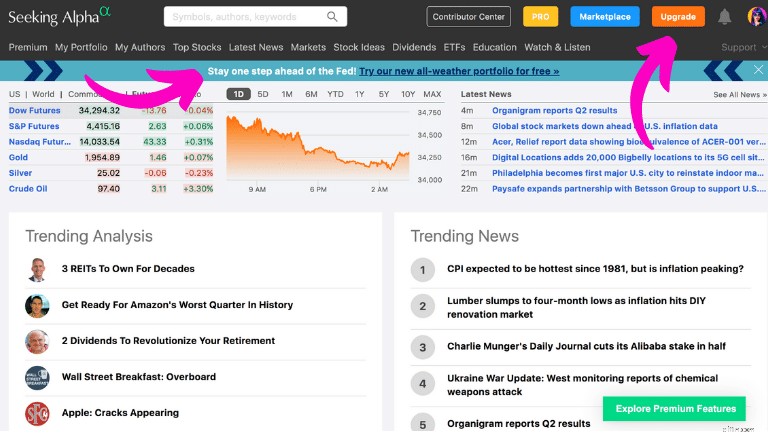
Come puoi vedere con il mio abbonamento Premium, Seeking Alpha promuove alcuni dei suoi prodotti (in questo caso, il pacchetto Pro).
Ad essere onesti, non sono particolarmente infastidito da questi annunci e non credo che tolgano nulla alla mia esperienza.
Caratteristica n. 2 del piano Premium:obiettivi di prezzo
Ti stai chiedendo se un titolo è sopravvalutato o sottovalutato?
Controlla le valutazioni di Wall Street per quel titolo e scorri fino alla sezione "Prezzo target".
In questo caso, ho utilizzato Google come esempio, quindi diamo un'occhiata al prezzo target di Google (e ad aprile 2022, Google veniva scambiato a $ 2.595,93).
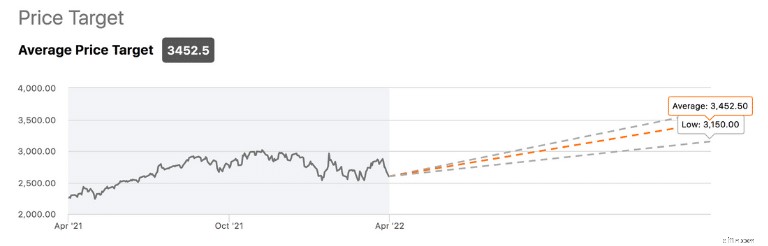
In altre parole, sulla base del prezzo obiettivo (3.452,50 dollari) rispetto al costo effettivo del titolo (2.595,93 dollari), le azioni di Google sono effettivamente sottovalutate.
Questo è probabilmente il motivo per cui il 98% degli analisti nella sezione Valutazioni di Wall Street valuta Google come un "Acquisto" o un "Acquisto forte".
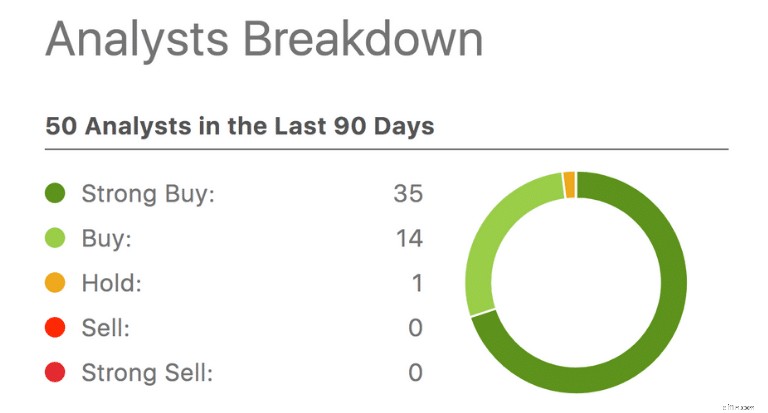
Il grafico seguente è un altro chiaro esempio di funzioni di target prezzo.
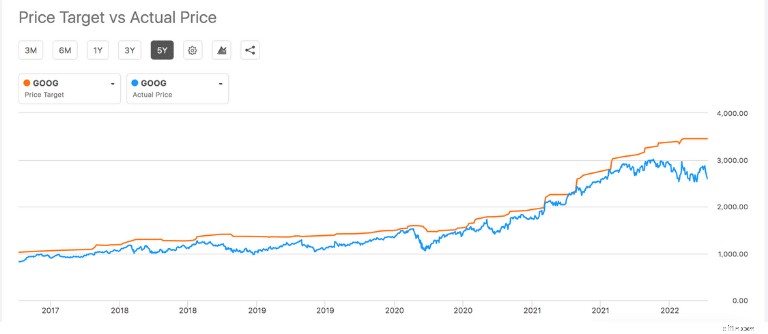
Nel grafico Prezzo target rispetto a Prezzo effettivo, vedrai che il prezzo target (in rosso) è stato quasi sempre leggermente superiore al prezzo effettivo di Google (in blu).
Quindi, se sei un value investor Se desideri acquistare azioni attualmente sottovalutate, potresti considerare Google come un investimento.
Ora, potresti anche ricordare il fiasco di GameStop ($GME) all'inizio del 2021, quando i trader su Reddit hanno accumulato denaro nelle azioni in fallimento $GME, causando alcuni importanti ostacoli finanziari per gli hedge fund e le piattaforme di investimento come Robinhood.
Sì, alcune persone potrebbero aver guadagnato denaro in questa saga di breve durata, ma molto probabilmente hanno perso denaro.
Dai un'occhiata al grafico del prezzo target qui sotto, che avrebbe mostrato a qualsiasi investitore razionale che era una mossa rischiosa investire denaro in $ GME:
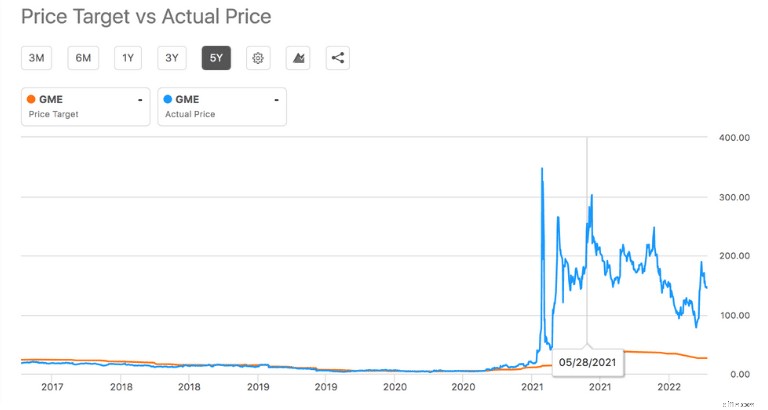
Come puoi vedere, l'obiettivo di prezzo (in rosso) si è aggirato costantemente intorno a pochi dollari mentre il prezzo effettivo di $ GME a un certo punto è salito a oltre $ 300.
Ricorda che concentrarsi solo su 1 punto dati, come l'obiettivo di prezzo, non dovrebbe essere il fattore decisivo per decidere se acquistare o vendere un titolo. Un obiettivo di prezzo è semplicemente una guida che dovrebbe essere considerata insieme ad altre informazioni.
Caratteristica n. 3 del piano Premium:chiamate notevoli
Se sei un investitore intermedio che desidera fare brainstorming su nuove idee di investimento, potresti voler iscriverti a Seeking Alpha's Notable Calls.
Puoi iscriverti a Notable Calls e ricevere idee sintetizzate e riassunte da aziende di tutto il mondo.
Puoi leggere la sezione Chiamate notevoli facendo clic su "Ultime notizie" e quindi su "Chiamate notevoli".
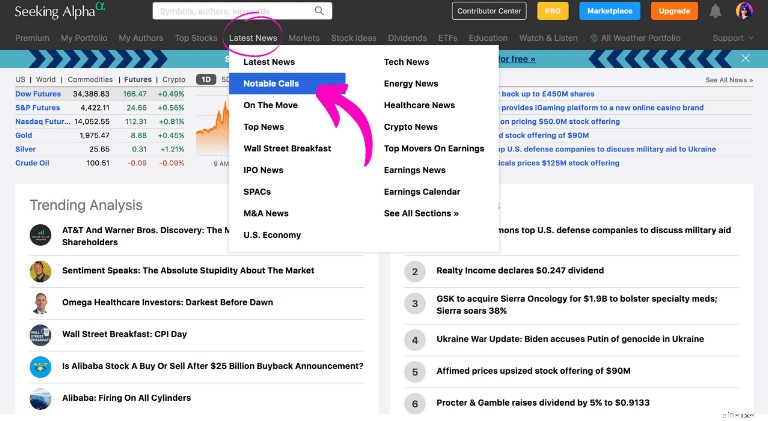
Una volta entrato nella sezione Notable Calls, puoi esplorare diversi argomenti (qualsiasi cosa, dalla fibra ottica ai marchi di abbigliamento come Levi Strauss).
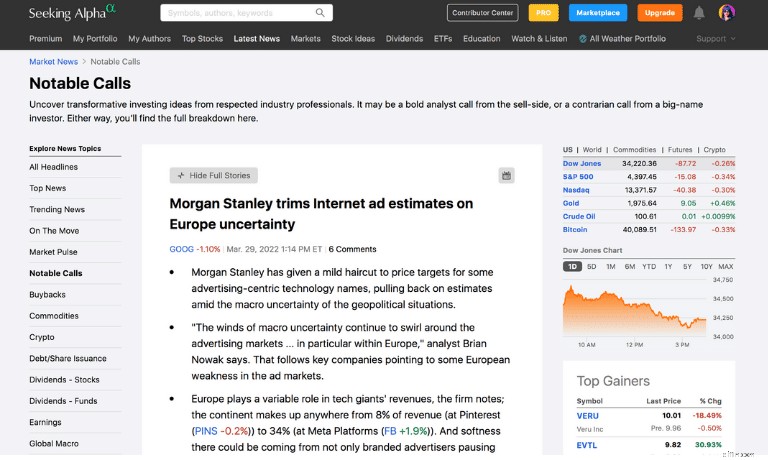
Le Notable Calls non vengono pubblicate quotidianamente:a volte potrebbe volerci anche un mese prima che le nuove informazioni popolano la sezione Notable Calls.
Poiché gli articoli su Notable Calls non vengono pubblicati in modo coerente, assicurati di continuare a leggere gli articoli degli autori esperti di Seeking Alpha per raccogliere ulteriori idee di investimento.
Funzione n. 4 del piano Premium:valutazioni degli autori
Poiché Seeking Alpha è una piattaforma di crowdsourcing, non sorprende che ogni titolo abbia anche una valutazione dell'autore di Seeking Alpha.
Ad esempio, se dai un'occhiata alla pagina di riepilogo di AT&T Inc., vedrai le valutazioni per le azioni $T suddivise per categoria:
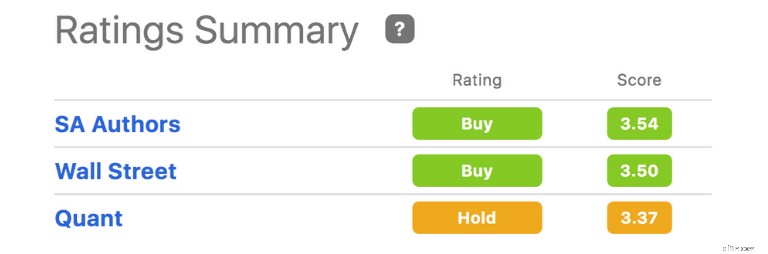
Per ulteriori informazioni sulle valutazioni degli autori di Seeking Alpha, fare clic sul collegamento ipertestuale blu "Autori SA".
Qui vedrai le valutazioni dell'autore Seeking Alpha per un titolo come:
- Molto rialzista
- rialzista
- Neutro
- Ribassista
- Molto ribassista
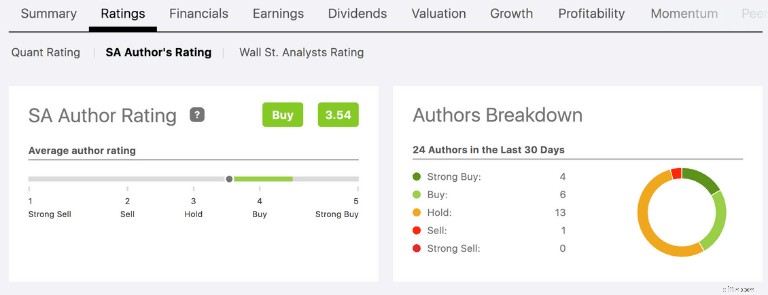
Tra gli altri fattori, vedrai la valutazione Seeking Alpha Author Rating e la suddivisione degli autori per ciascuna valutazione.
Nel caso di AT&T, 10 autori su 24 hanno consigliato di acquistare o acquistare fortemente il titolo (circa il 42%).
Inoltre, puoi anche rivedere il track record delle valutazioni degli autori negli ultimi anni:
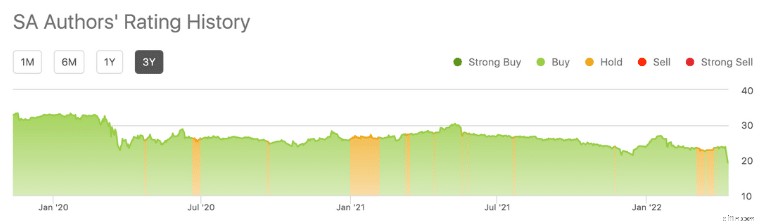
Sulla base di questo grafico, gli autori di Seeking Alpha hanno generalmente consigliato di "acquistare" o "acquistare fortemente" AT&T negli ultimi 3 anni.
È stato proprio di recente che gli autori hanno suggerito di “Hold” invece di acquistare.
Infine, puoi anche scegliere di visualizzare la cronologia delle valutazioni per autore:
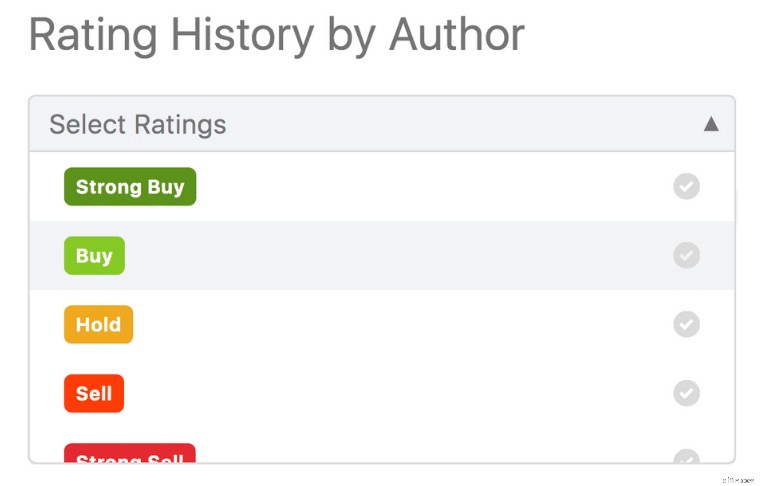
Pertanto, se sei curioso di vedere quali autori hanno valutato AT&T come un suggerimento "Acquista" anziché "Vendi", questo è il posto giusto per farlo.
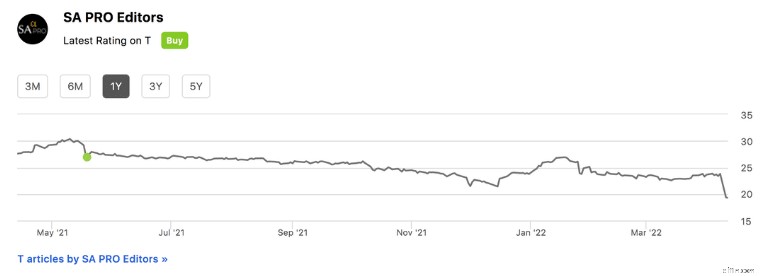
Sopra c'è uno screenshot di un autore che ha consigliato di acquistare azioni AT&T.
Se ti stai chiedendo perché l'autore ha consigliato di farlo, puoi fare clic sul collegamento ipertestuale blu per leggere gli articoli AT&T dell'autore.
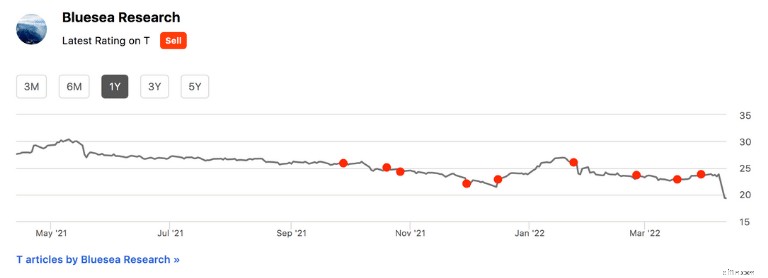
Allo stesso modo, se trovi un autore che ha suggerito di vendere le azioni $T, puoi scoprire quando l'autore ha suggerito di farlo (vedi i punti rossi sul grafico relativo all'andamento delle azioni $T).
Ancora una volta, puoi leggere gli articoli di quell'autore su AT&T facendo clic sul collegamento ipertestuale blu sotto la tabella di vendita dell'autore.
Funzione n. 5 del piano Premium: Gradi dei dividendi
Se sei un investitore in dividendi , questa è una delle funzionalità più interessanti che troverai:lo strumento Dividend Grade.
In breve, lo strumento Dividend Grade è progettato per aiutare gli investitori a determinare se un dividendo è sicuro e se il reddito da dividendi sarà stabile, aumenterà o eventualmente diminuirà.
Esistono 4 diversi gradi di dividendo, spiegati di seguito:
Sicurezza dei dividendi
Misura la redditività e la stabilità di un dividendo
Crescita dei dividendi
Misura il potenziale di crescita di un dividendo utilizzando tassi di crescita storici e stimati (include entrate, flusso di cassa, profitti, ecc.)
Rendimento da dividendi
Misura il rendimento storico di un dividendo e confronta il rendimento con altri titoli dello stesso settore per determinare il rendimento futuro del dividendo
Coerenza dei dividendi
Misura la coerenza dei pagamenti dei dividendi e degli aumenti dei dividendi di una società
Uno dei motivi per cui gli investitori, soprattutto quelli passivi, apprezzano così tanto i dividendi è perché i dividendi sono una forma di reddito passivo .
E, più azioni che pagano dividendi acquisti, nel tempo, puoi davvero iniziare a guadagnare qualche soldo solo attraverso le azioni che pagano dividendi.
Dai un'occhiata agli attuali gradi di dividendo AT&T (ad aprile 2022):
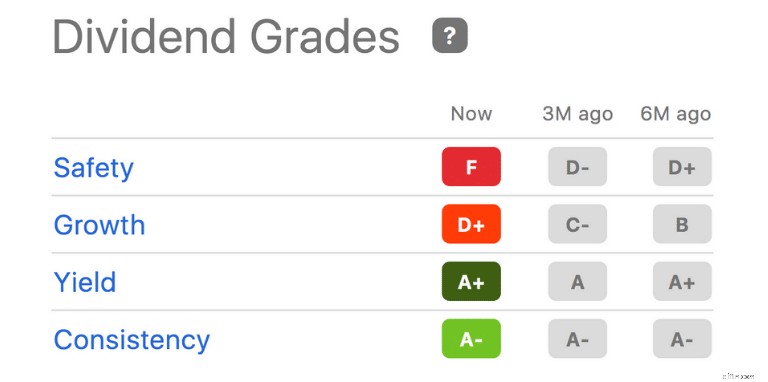
Quello che mi piace dei voti dei dividendi è che puoi vedere i voti attuali rispetto a quelli di 3 mesi fa e anche di 6 mesi fa.
Chiaramente, la sicurezza dei dividendi per AT&T è a rischio. Ciò significa che AT&T potrebbe diminuire o addirittura eliminare il suo dividendo.
Ed è vero:dai un'occhiata al banner rosso di avviso quando digito $T nella barra di ricerca:
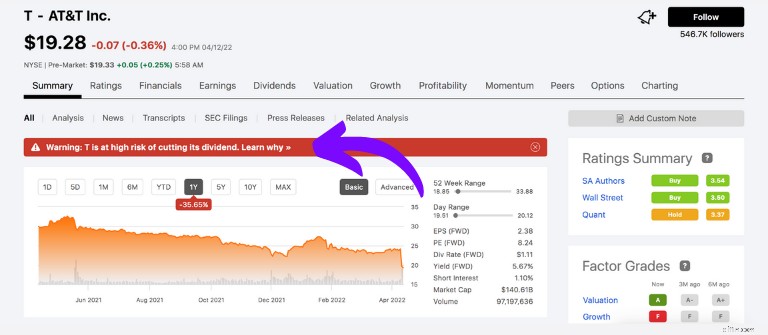
Senza nemmeno guardare i gradi dei dividendi, mi viene immediatamente comunicato che AT&T potrebbe tagliare i suoi dividendi.
Se vuoi saperne di più basta cliccare sul banner:
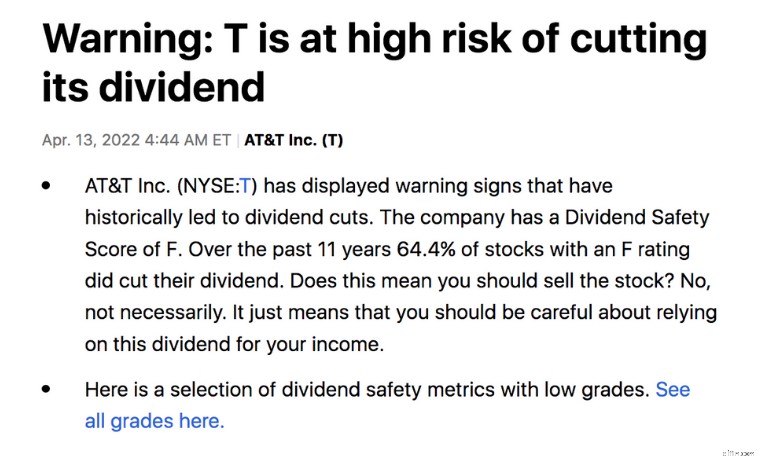
Verrai reindirizzato a un articolo con un'ulteriore analisi del motivo per cui AT&T potrebbe tagliare i suoi dividendi nel prossimo futuro.
Ora, se desideri approfondire i singoli gradi di dividendo, fai semplicemente clic sul collegamento ipertestuale blu di ciascun grado di dividendo:
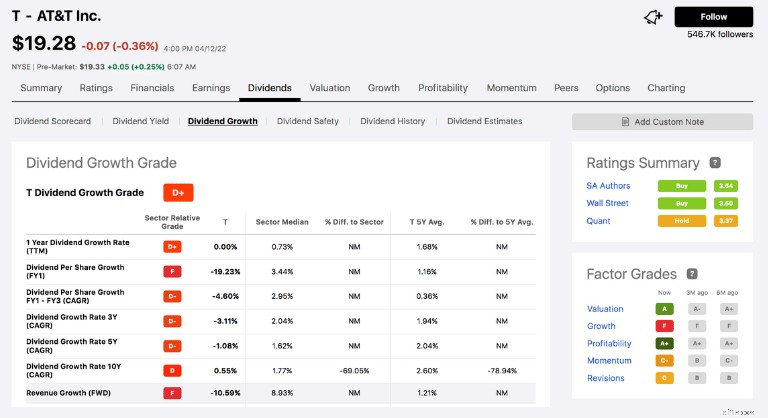
Ad esempio, nello screenshot qui sopra, vedrai un frammento di quanto in profondità ottieni semplicemente leggendo il grado di crescita dei dividendi.
Preferisco controllare la scheda Cronologia dividendi, che assomiglia a questa:
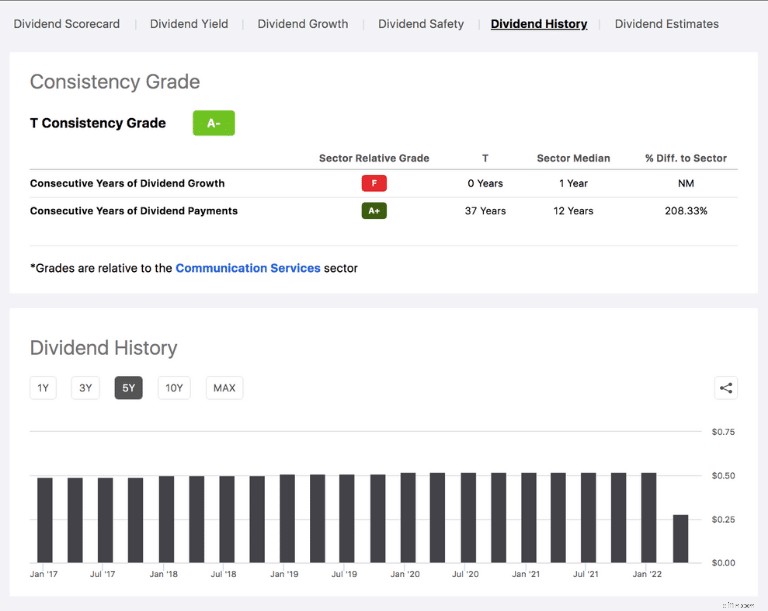
Come puoi vedere, negli ultimi 5 anni, AT&T ha avuto una storia di dividendi molto coerente, ma a partire dal 12 aprile 2022 i dividendi sono scesi da $ 0,52 a $ 0,28.
Si tratta di un taglio molto drastico e in genere segnala una preoccupazione per gli investitori.
Infine, se desideri saperne di più sulle future stime dei dividendi (che non fanno parte dei 4 gradi di dividendo originali), puoi fare clic sulla scheda corrispondente:
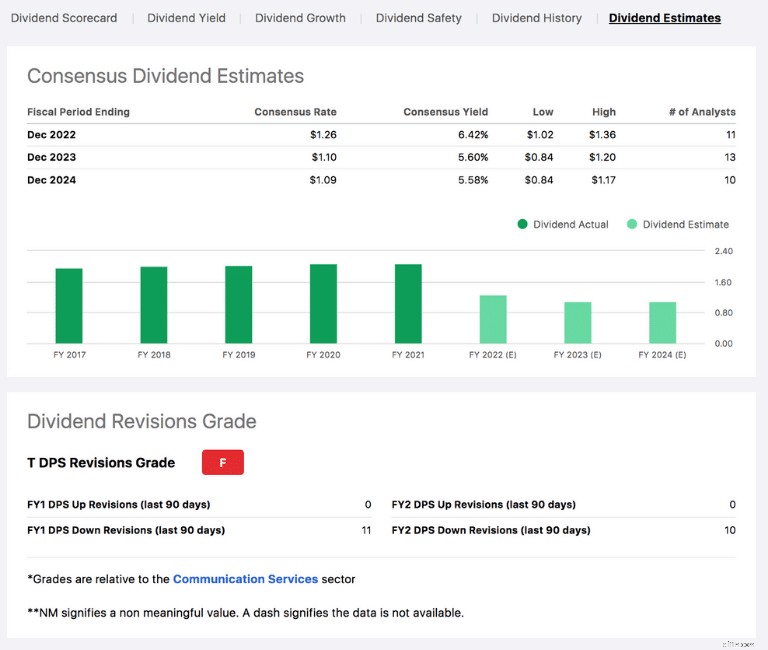
Come puoi vedere, le stime sulla crescita dei dividendi non prevedono che il rendimento dei dividendi ritorni ai livelli originali di AT&T, almeno non per i prossimi anni.
Funzione n. 6 del piano Premium:dashboard delle notizie
Se sei una persona che vuole semplicemente leggere le notizie azionarie più importanti e urgenti senza entrare nel nocciolo della questione, utilizza la dashboard delle notizie.
Puoi accedere alla dashboard delle notizie facendo clic sulla scheda "Ultime notizie".
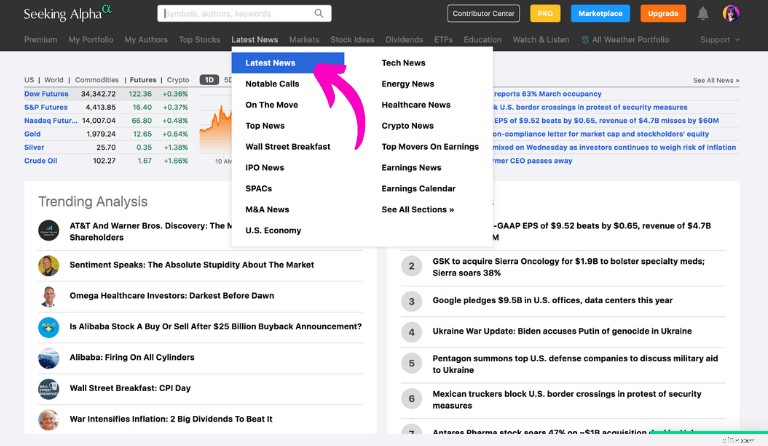
Dopo aver fatto clic sulle schede "Ultime notizie", verrai reindirizzato a una pagina intitolata "Notizie di mercato".
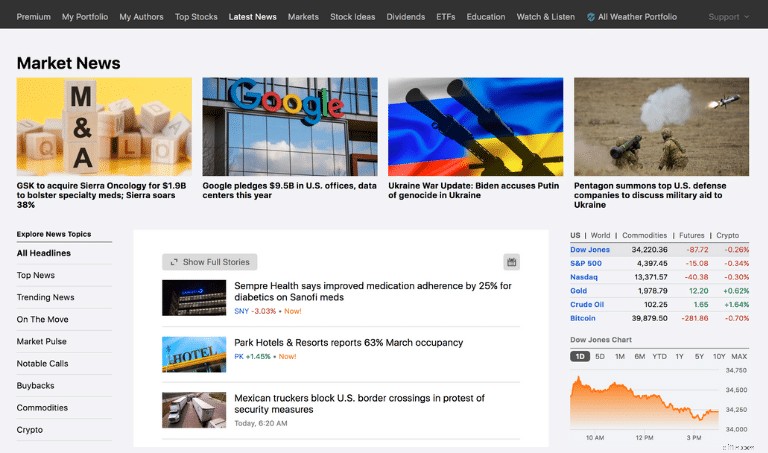
Da questa dashboard, puoi utilizzare il filtro (a sinistra) per esplorare argomenti rilevanti per te.
Puoi anche impostare un intervallo di date per concentrare le tue letture su un determinato intervallo di tempo.
Caratteristica n.7 del piano Premium:Factor Scorecard
Similmente ai voti dei dividendi, potresti anche vedere ciò che Seeking Alpha chiama Factor Scorecard.
In altre parole, la scorecard è uno strumento che ti aiuta a prendere decisioni rapide se considerare un titolo o escluderlo, in base ai tuoi criteri di investimento.
La Factor Scorecard utilizza 5 fattori, tra cui:
- Valore
- Crescita
- Redditività
- Slancio
- Revisioni EPS (utili per azione)
Diamo un'occhiata alla Factor Scorecard per $GME, meglio conosciuta come Gamestop.
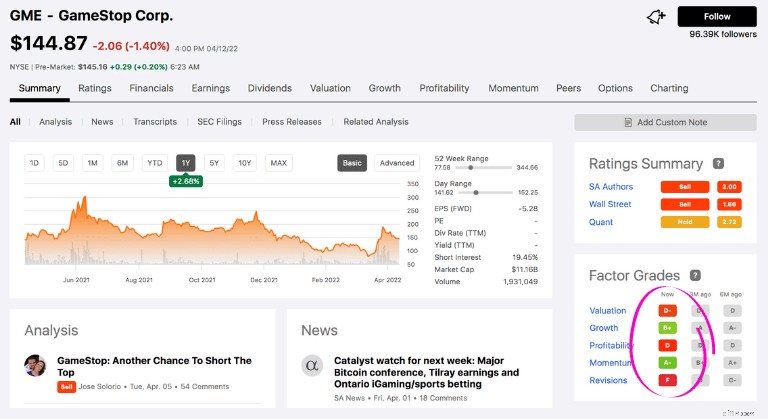
La casella Factor Grades è suddivisa nelle 5 categorie che ho menzionato prima.
Il voto di ciascuna categoria viene anche confrontato con il voto precedente di 3 e 6 mesi fa:
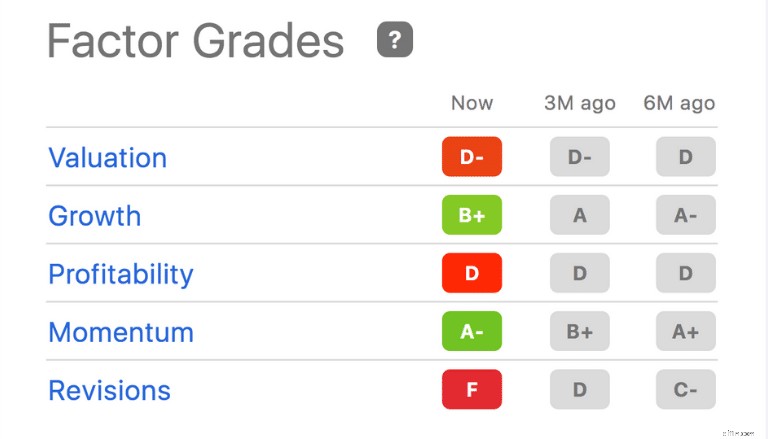
Chiaramente, i fattori di valutazione per Gamestop sono piuttosto scadenti. Ciò significa che Gamestop non è probabilmente il miglior investimento, a meno che non ti senta a tuo agio nel correre rischi con un titolo piuttosto volatile.
Se desideri approfondire i singoli voti dei fattori, fai semplicemente clic sul collegamento ipertestuale blu di ciascun voto.
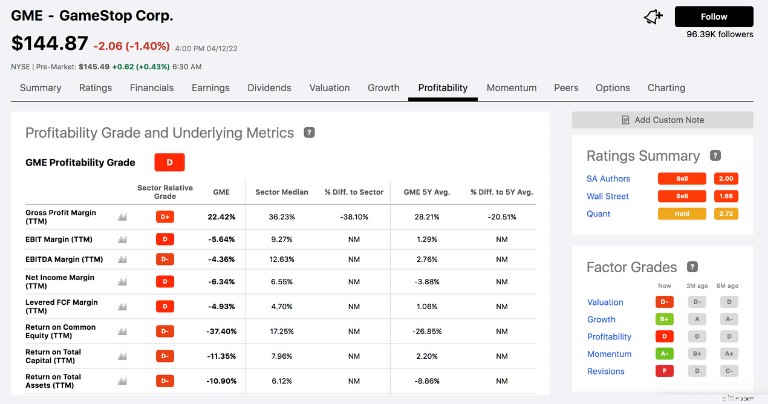
Ad esempio, nello screenshot qui sopra, vedrai un frammento di quanto approfondito ottieni semplicemente leggendo la redditività di Gamestop.
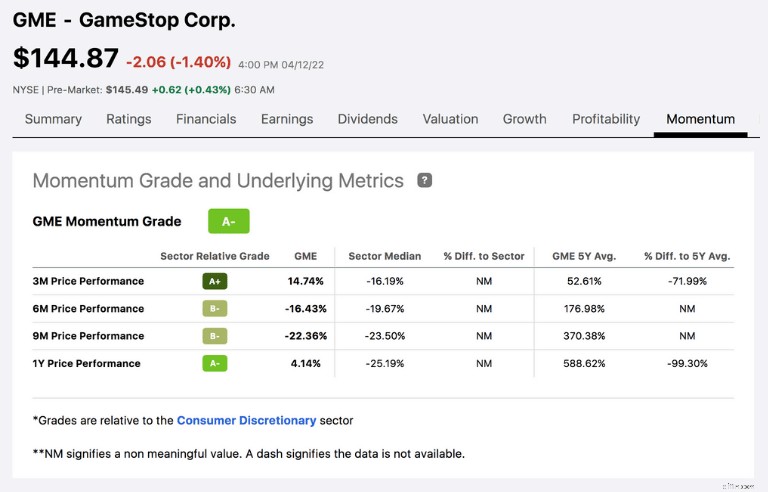
Mi piace anche guardare la scheda Momentum per verificare le prestazioni passate e la performance di $GME rispetto ad altri benchmark, come ad esempio l'S&P 500.
Ecco un'istantanea delle prestazioni passate di Gamestop rispetto ad altre società del settore:
Puoi anche verificare l'andamento del prezzo di Gamestop rispetto a determinati benchmark.
Nello screenshot qui sotto, l'indice S&P 500 viene utilizzato come benchmark:
Questo grafico sul rendimento del prezzo racconta la storia completa:
Puoi vedere come Gamestop abbia costantemente sottoperformato rispetto all'S&P 500 fino all'inizio della saga di Gamestop all'inizio del 2021.
Since early 2021, the Gamestop prices have relatively outperformed the S&P 500 – but is it really a solid investment?
That’s where Seeking Alpha’s tools like the Factor Scorecard can really come into play and help guide you to an answer.
Premium Plan Feature #8:Peer Comparisons
Let’s say you’re thinking about buying Tesla, but you’re not 100% convinced that it’s the right addition to your portfolio.
That’s where the Peer Comparisons come in.
The Peer Comparison tool is customizable, so you can change the stock types that you’re comparing.
Here’s an example:First, search your desired stock (in this case, Tesla):
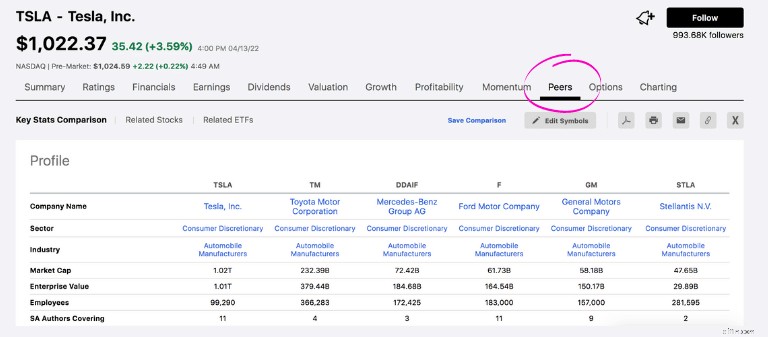
Make sure you click on the “Peers” tab.
Once you’re on the “Peers” tab, you can see that Seeking Alpha already defaults to several peer stocks with which you can compare Tesla.
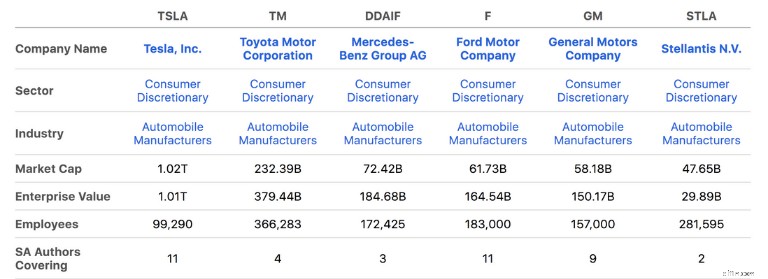
However, if you want to customize the peer comparisons or even reduce the number of peers you’re comparing to, then just click on the “Edit Symbols” button.
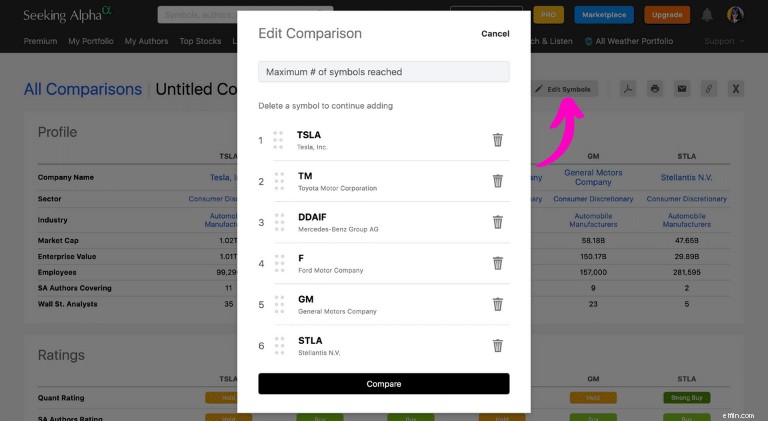
This is where you can customize all peer comparisons.
Premium Plan Feature #9:Alert Customization
If you really like a stock and want to receive alerts whenever news about that stock is released, you can customize your own email alerts.
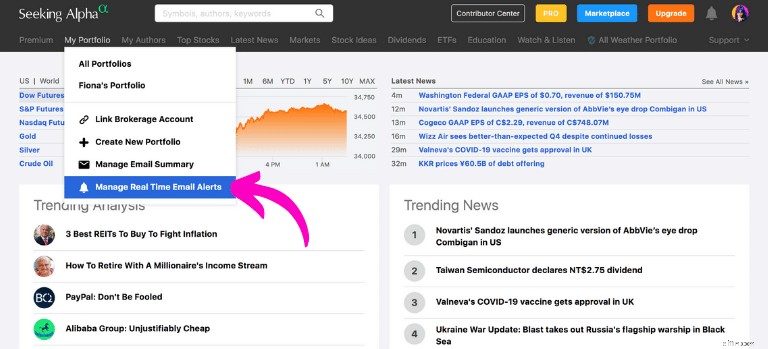
You do this by hovering over the “My Portfolio” tab and then clicking on “Manage Real Time Email Alerts.”
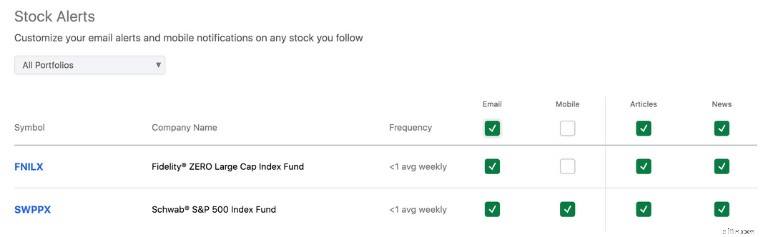
You’ll see a snapshot of your favorite stocks, which you can then select to follow.
The next thing you need to do, is:
- Select the type of alert (article vs. news)
- Select your alert method (email vs. mobile push notification)
I’m a big fan of this alert customization option.
Premium Plan Feature #10:Quantitative Ratings
One of the key features when evaluating a stock on Seeking Alpha should be the Quant Ratings section.
Quant Ratings are based on a computer algorithm with the goal to find the best stocks.
As with the previous Ratings (Wall Street and SA Authors), the Quant Ratings compare the stock to other stocks in the same industry.
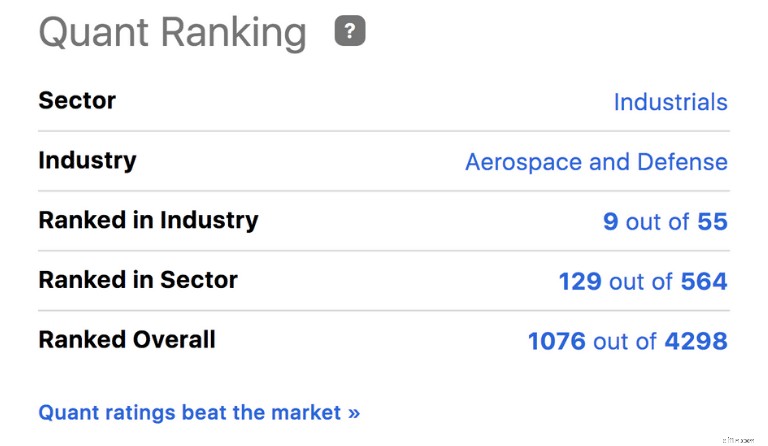
The Quant Rankings use historical information to determine the numbers, as shown in the above screenshot (this case, for Lockheed Martin).
If the Quant Rankings deem a stock to be a top pick, then that stock would be marked as “Strong Buy.”
In Lockheed Martin’s case, the Quant Rankings determined the stock to be a “Hold” for now.
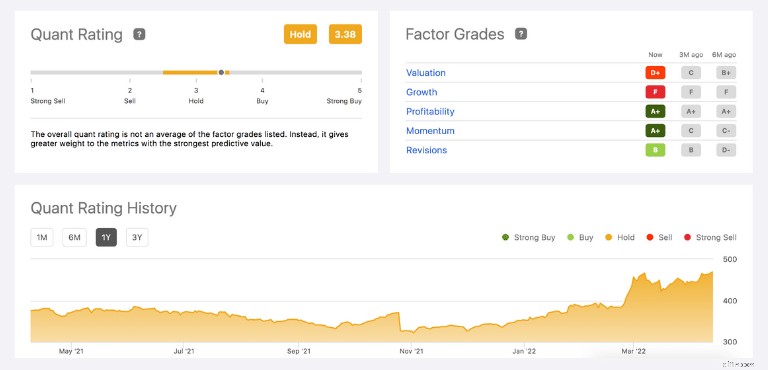
The Quant Ratings and the Factor Grades are both designed and managed by Steve Cress , who has had extensive experience in investment research, hedge funds, and the likes.
The Quant Ratings is what you are looking for – that’s because they can help boost your portfolio performance.
In fact, Seeking Alpha claims that stocks rated as a 4.5 or higher have beat the S&P 500 4x.
On the other hand, stocks rated as 1.5 or lower underperformed the S&P 500, returning roughly 33% of the S&P 500.
Clearly, the Quant Ratings are very helpful.
Premium Plan Feature #11:Stock Screening Tools
As you can see, Quant Ratings are a very powerful tool when evaluating the strength of a stock.
But what if you want to view the top-rated stock, using the Quant tools?
Enter the Stock Screener.
You’ll find the Stock Screener by clicking on the “Top Stocks” tab and then clicking on “Top Rated Stocks.”
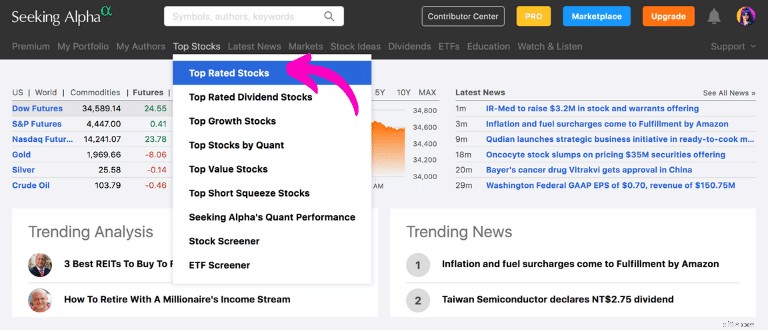
From there, you’ll see a summary of the top rated stocks, and typically the highest Quant Rating is 4.99:
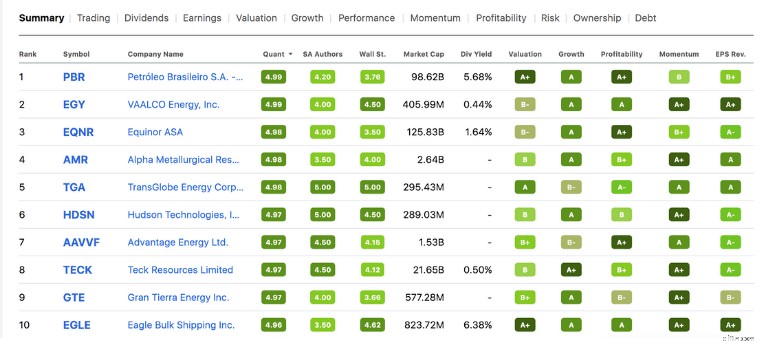
Remember what was said in the previous Quant Ratings section:
Stocks given a Quant Rating of 4.5 or higher have typically outperformed the S&P 500 by up to 4x!
And it’s true that across the board PBR, also known as Petrobas, (in this case the top Quant rated stock) is considered a “Buy” to “Strong Buy” across the board:
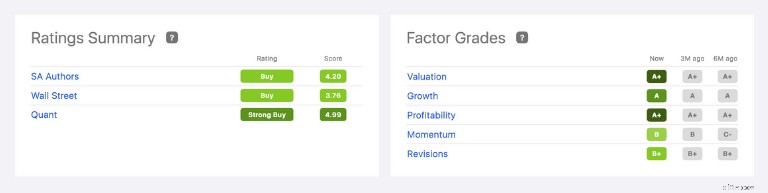
This stock screener is a feature that is currently available to Premium users.
Another neat trick with the Stock Screener?
You can customize your own stocks by using up to 100 different filters!
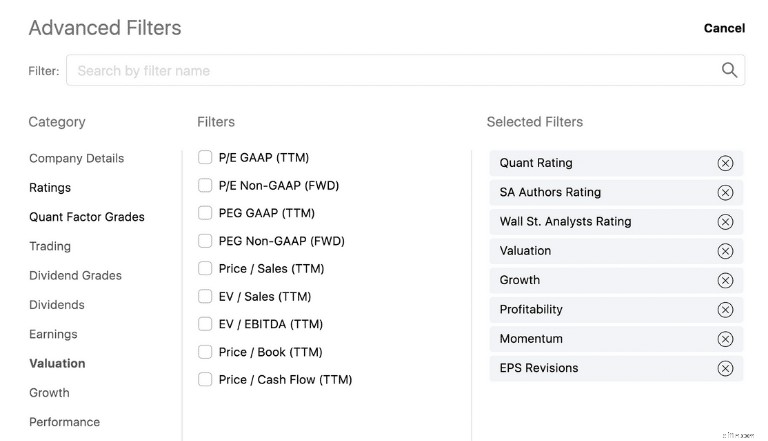
Above is just an example of the many different filter applications you can use to customize your stock screener.
Based on historical performance, stocks ranked as 1.5 or lower drastically underperformed the S&P 500.
Premium Plan Feature #12:Wall Street Consensus
If you want to follow what sell-side analysts have to say in terms of buying, holding, or selling a stock, then check out the Wall Street Ratings.
Instead, Seeking Alpha collects data from the Wall Street analysts to determine whether a stock is rated as:
- Very Bullish
- Bullish
- Neutral
- Bearish
- Very Bearish
The reason why Wall Street Ratings can be helpful for people like you and me is that these rankings should (in theory) be objective and neutral.
To review the Wall Street Ratings of a certain company, just type in the company name or ticker symbol in the “Search” bar on the top, and then look at the information on the right of the screen.
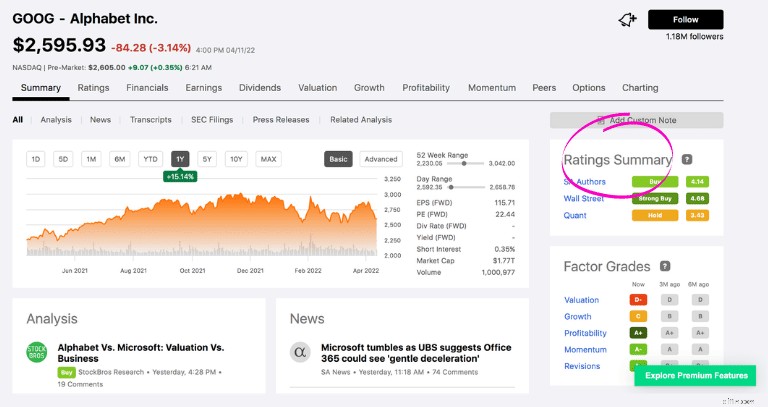
When you look at the right-hand side, you’ll see the “Ratings Summary” outline, with 3 titles:
- SA Authors
- Wall Street
- Quant
To learn more about the Wall Street rating, click on the “Wall Street” blue hyperlink.
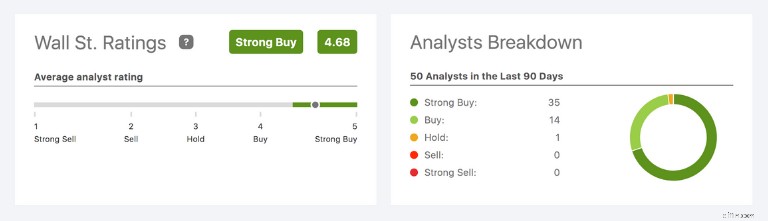
Among other factors, you’ll see the Wall Street average analyst rating and the Analyst Breakdown for each rating.
In Google’s case, 49 out of 50 Wall Street analysts recommended to Buy or Strongly Buy the stock (that’s 98% of analysts!).
Furthermore, you can also review the Wall Street Ratings’ track record for the past few years:
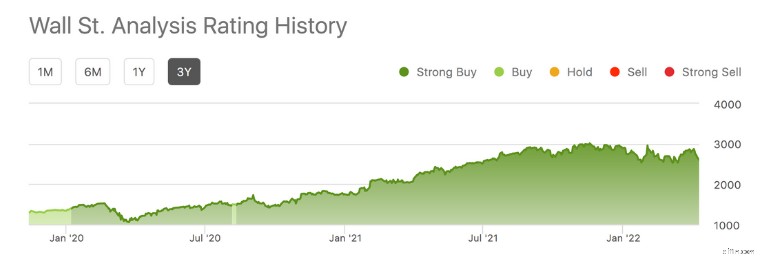
Based on this graph, Wall Street analysts have recommended to Buy or Strongly Buy Google over the past 3 years.
Lastly, you can also see how the Wall Street analysts’ opinions have changed over time with the Recommendations Chart (found at the bottom of the page):
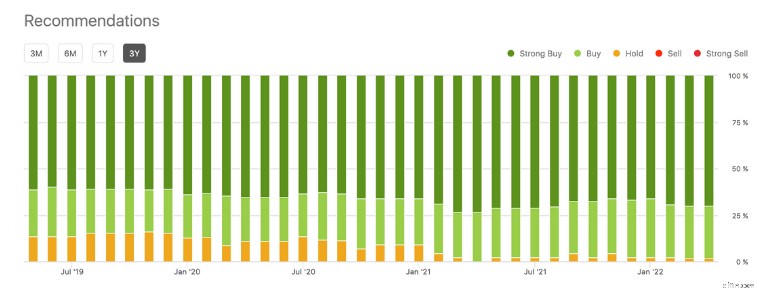
It appears that in 2019 and early 2020 more analysts recommended to hold Google, while starting in 2021, virtually all analysts recommended to buy Google.
Premium Plan Feature #13:Data Visualization Charts
Since I’m a very visual person, one of my favorite features on Seeking Alpha is the data visualization of the charts.
In fact, Seeking Alpha has a specific tab named “Charting” that you can access to view the data in an aesthetically pleasing manner:

Once you click on the “Charting” tab, you can even customize the data you want to view.
For example, you can compare one stock’s performance (in the case, Gamestop) to another stock or benchmark like the S&P 500:
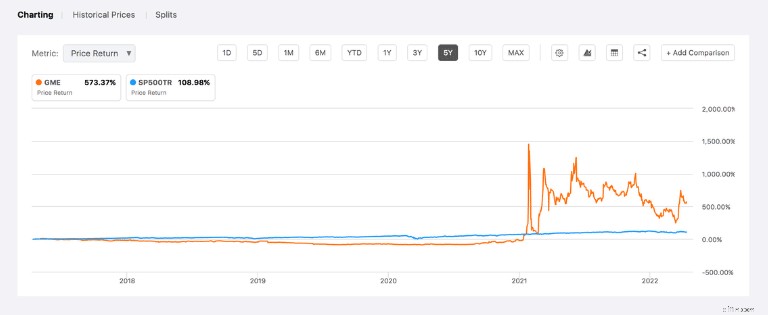
In this custom comparison, you can see that the S&P 500 has typically outperformed Gamestop until early 2021.
If you want to add additional stocks or funds to compare, you can do so, as well:
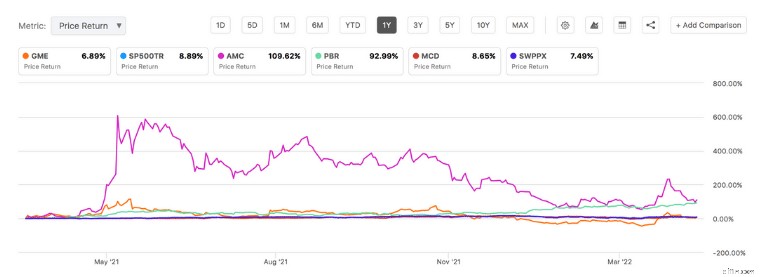
Another neat way to customize your data is changing the format of the data presentation – you can select:
- Area
- Columns
- Line graph

If you’re happy with the data visualization chart you created, you can also copy to clipboard, download, or copy the link to your chart for future reference.
Premium Plan Feature #14:Earnings Calls
If you’re a Seeking Alpha member, you have exclusive access to earnings calls transcripts.
In most cases, you can expect to have an earnings call at the end of the first 3 quarters.
At the end of the 4th quarter, you’ll receive both an annual report as well as a quarterly report.
If you’re busy at the time of the actual earnings call, you can always count on Seeking Alpha to have a transcript available – both audio and written versions.
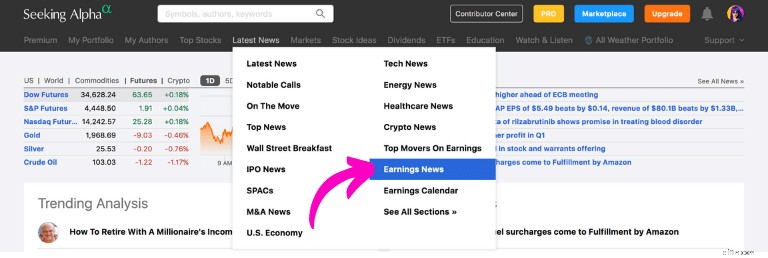
You can access the earnings reports of any publicly-traded company by hovering over “Latest News” and then clicking on the “Earnings News” button.
You can also access a schedule of the upcoming earnings calls by clicking on the “Earnings Calendar.”
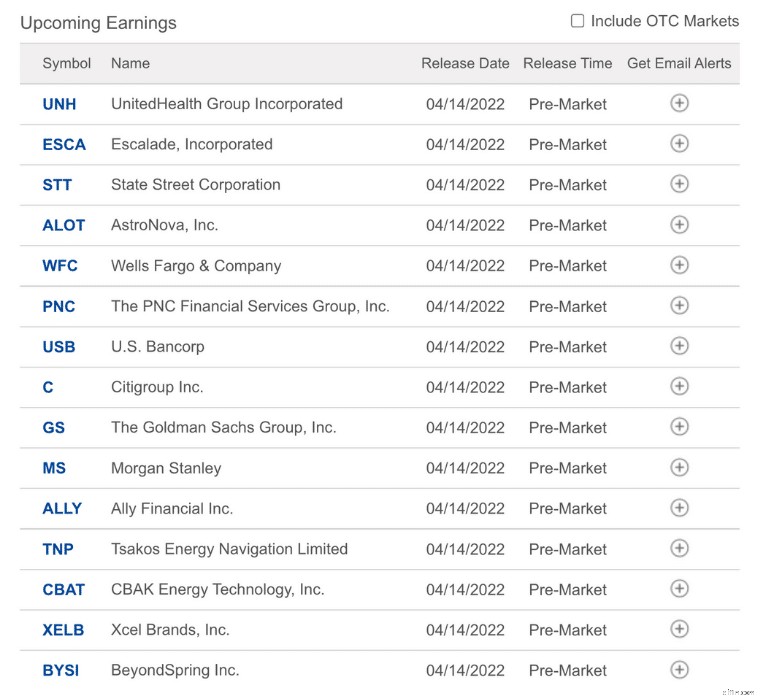
Once in the Upcoming Earnings tab, you can select which company you want to listen to and you can even sign-up for custom email alerts by clicking on the “+” sign.
If you’re looking up one of your favorite companies, let’s call it Amazon, then you just have to click on the “Earnings” tab for that stock:

From there, you can click on the “Transcripts” tab and look at all previous transcripts:
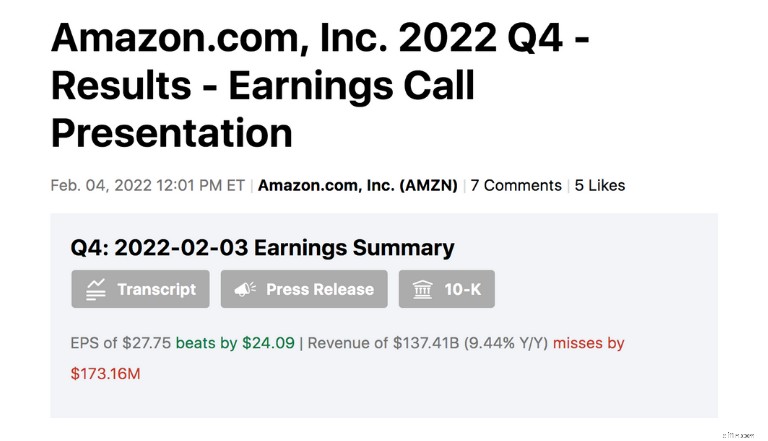
Depending on the company you review, you can also access a PDF file with slides that highlight the company’s key points.
Premium Plan Feature #15:Unlimited Access to Articles
With the Premium (and of course Pro) memberships, you also have unlimited access to exclusive articles written by industry professionals.
Since there is so much information, you can filter out the articles in several different ways.
First, you can simply access your home page and review the “Trending Analysis” of the day or the “Trending News” of the day.
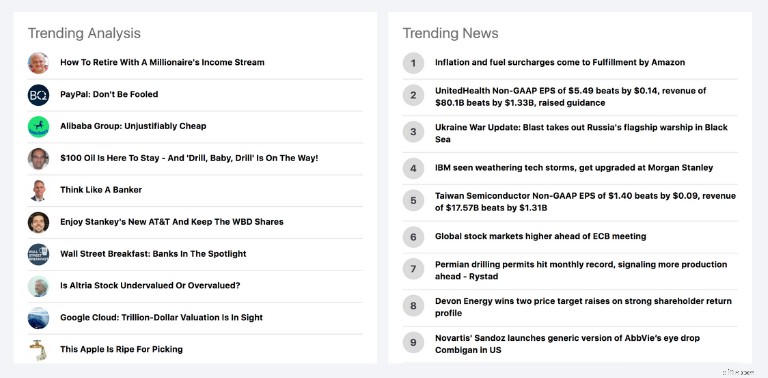
If you want to review articles written by various authors about just 1 particular stock or fund, then just type in the stock name or ticker symbol into the Search Bar.
From there, click on “Summary” and then on “Analysis” so you can see the various articles offered by authors on that stock.
Here’s an example of articles written about the Tesla stock:
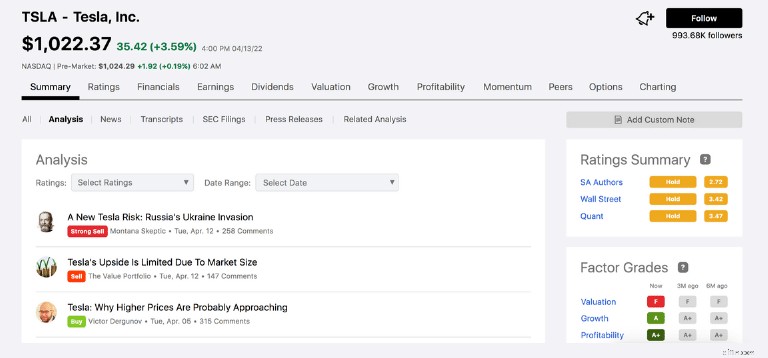
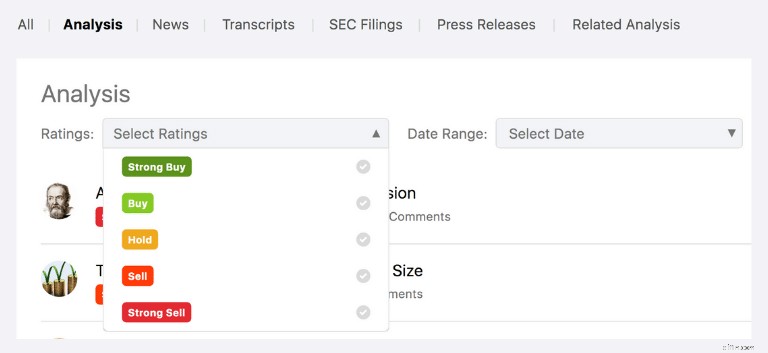
If you want to read articles from authors who advocate buying, selling, or holding, you can customize your ratings by clicking on the “Select Ratings” drop down box.
While most articles do focus on US-based public companies, there are some articles that also focus on alternative investments as well as international companies.
Premium Plan Feature #16:Create Your Own Mock Portfolio
As a Premium Seeking Alpha user, I’m a very big fan of creating your own portfolio in Seeking Alpha.
If you’re dedicated to kickstarting your kids’ financial future, then you may also want to check out the Greenlight Debit Card , which can do wonders.
You can set up your own mock portfolio in Seeking Alpha by hovering over “My Portfolio” and then clicking on “All Portfolios.”
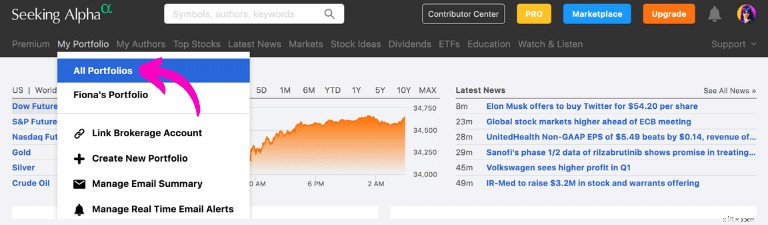
From there, you can click the button titled “+ New Portfolio.”

This will allow you to add a new, mock portfolio while using the Seeking Alpha platform.
You can give that portfolio a title and then you can either link your outside brokerage account to this portfolio or add your own stocks to the portfolio.
For the purpose of this section, we’re going to click on “Create Portfolio.”
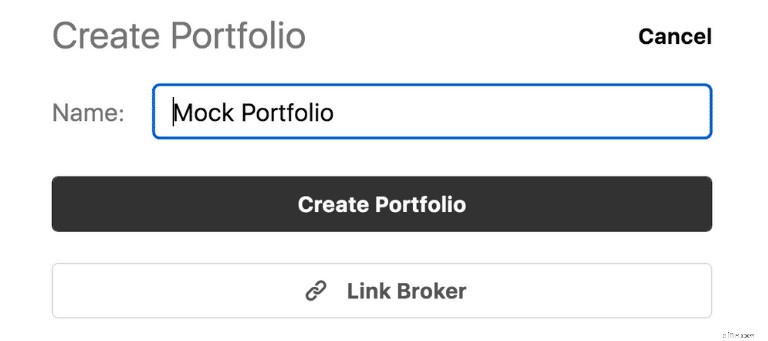
Once you’ve created your portfolio, you can start adding ticker symbols to complete your portfolio.
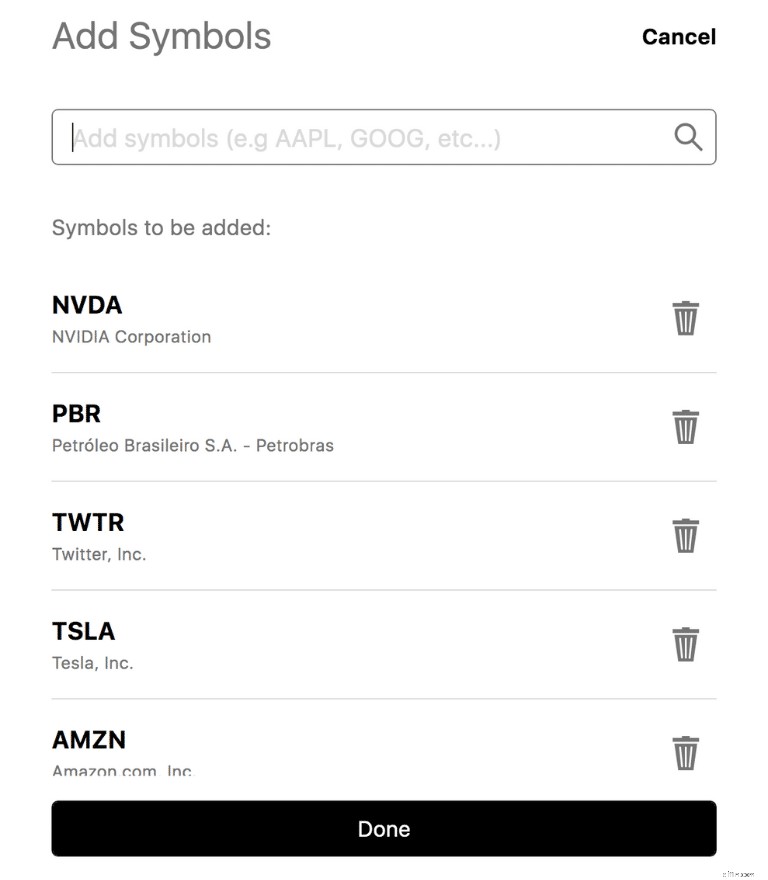
Once you’re happy with your portfolio construction, you can click “Done.”
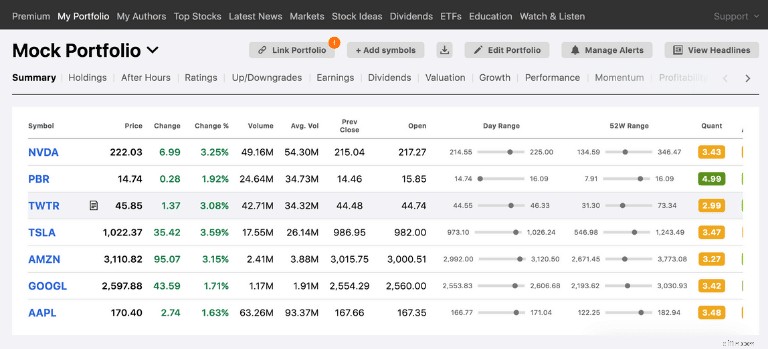
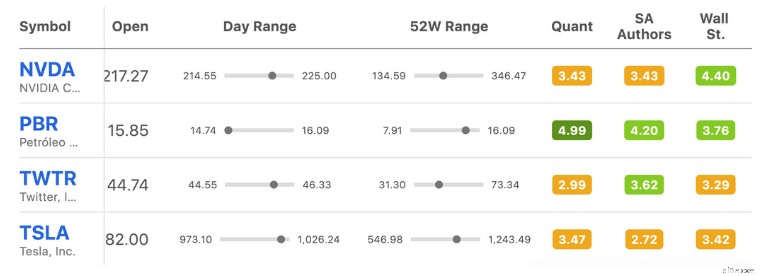
Seeking Alpha does a fantastic job breaking down each stock in your mock portfolio by using multiple different factors.
You can even compare the Quant, SA Authors, and Wall Street ratings to each other:
If you click on the “View Headlines” button in your portfolio, you’ll see an assortment of articles written just for your specific stocks in your portfolio:
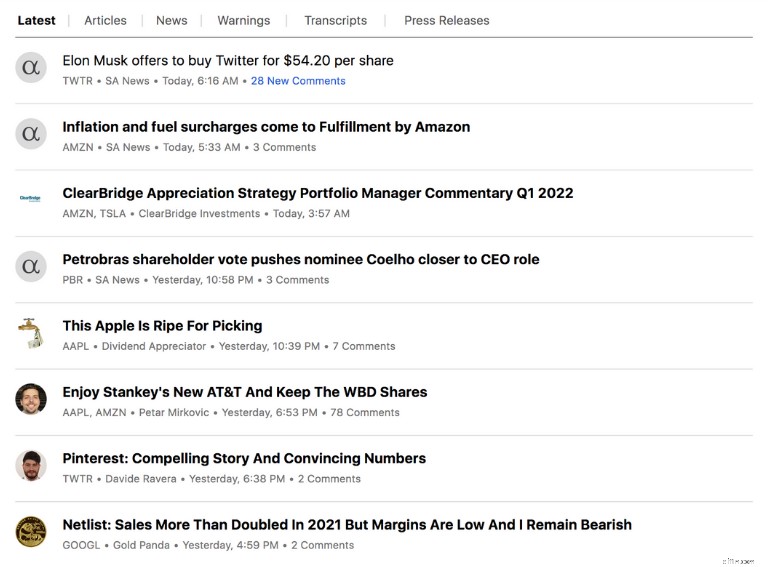
Finally, one of the other notable features of your Mock Portfolio is the custom alert and notification button.
When you click on “Manage Alerts” you can customize your alerts based on:
- Content
- Delivery
- Price alerts
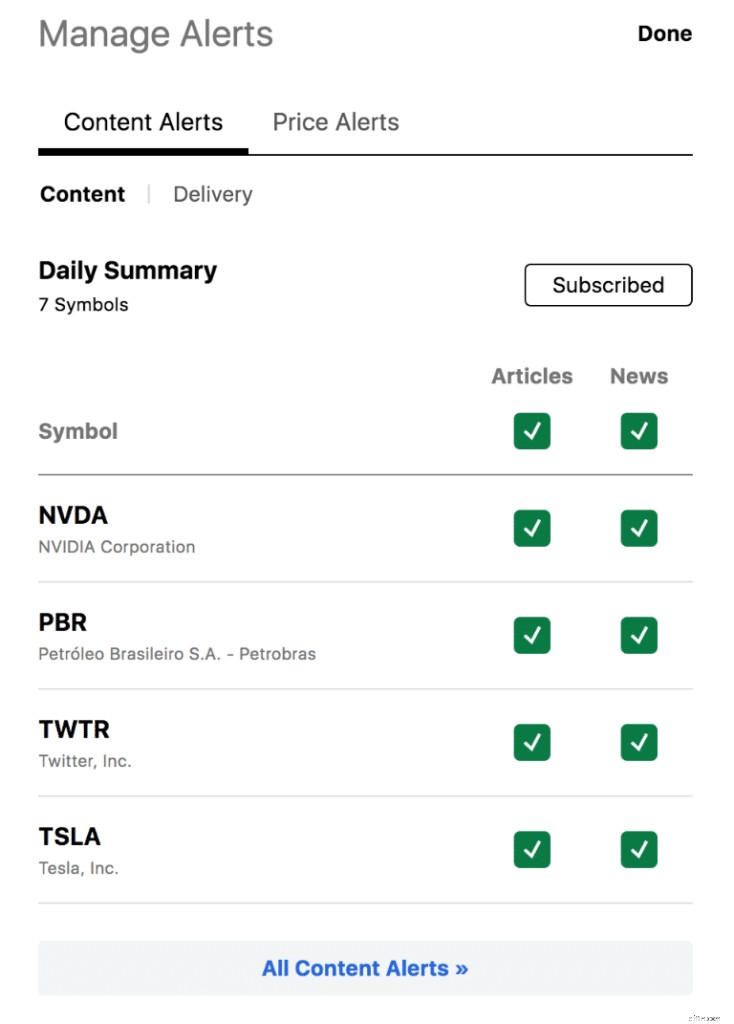
So, if there is an update on a stock like Twitter for example, you’ll receive real-life notifications to your email or phone – depending on the delivery method that you select.
You can also manage your price alerts, which I will review in a separate section here.
Premium Plan Feature #17:Manage Your Custom Price Alerts
If you’ve already created your mock portfolio through Seeking Alpha (or even if you’ve already connected your outside brokerage account with Seeking Alpha), you can set custom price alerts.
For example, if you own shares of Twitter and the current price Quant Rating is 2.99, which is nearing a sell territory, then you may want to filter for other stocks that might be deemed a “Strong Buy.”
Here’s how (this is assuming you’ve already set up your own portfolio in Seeking Alpha. If not, then please reference the previous feature):
First, access your portfolio and click on “Manage Alerts.”
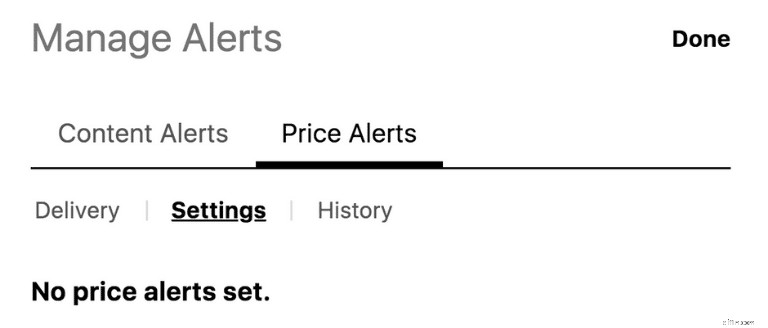
Then, click on “Price Alerts” and then on “Settings.”
From there, you’ll want to click on “All Price Alerts,” which you’ll find at the bottom of the dialogue box.
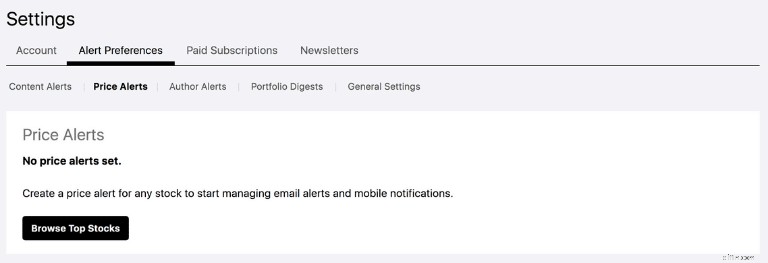
From there, click on the “Browse Top Stocks” button.
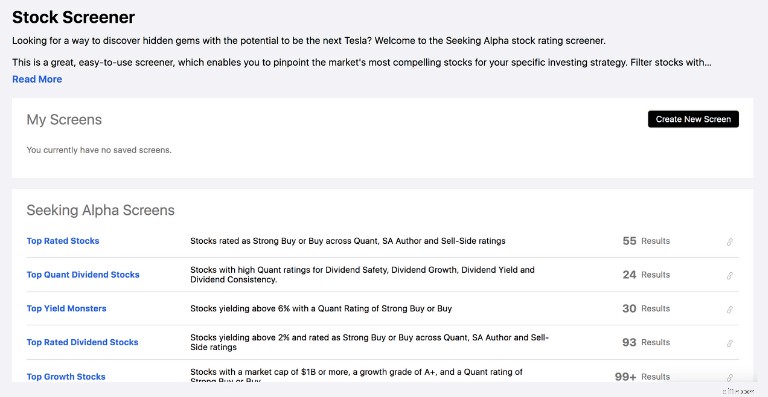
You can either continue using the Seeking Alpha Screens (and there are many) or you can create your own, custom screen.
If you create your own custom screen, you’ll be brought to a window like the one below:
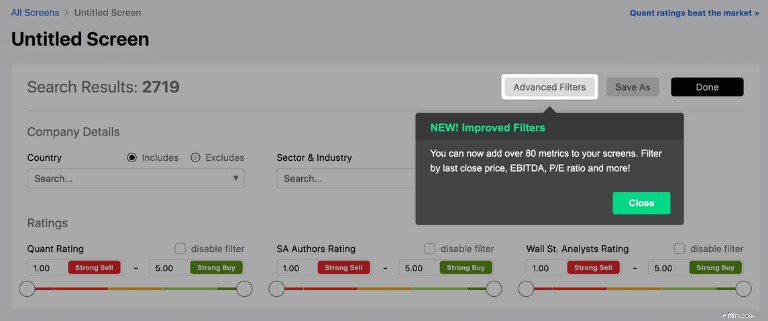
You can customize your stock screener by adding up to 80 different filters.
For example, if you want to screen for all stocks that are assigned a 4.00 out of 5.00 rating for the Quant, SA Authors, and Wall St. Analysts, this is the place to do so.
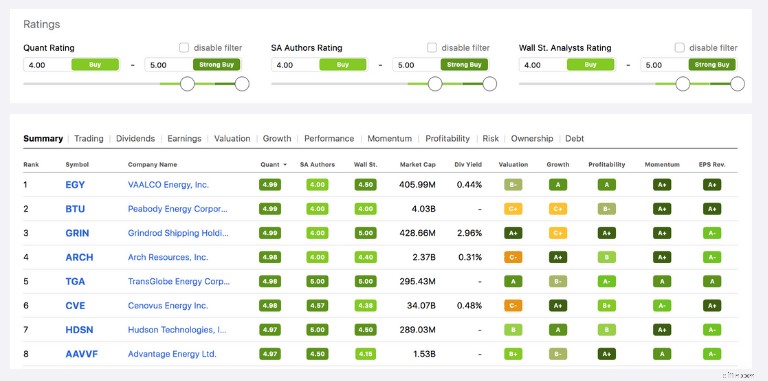
Take some time to experiment with the screening tool, because there is just so much information.
However, if you’re ever wondering why or how to filter for the best stocks for your portfolio (or your child’s portfolio), this is probably the tool you’ll want to use.
Premium Plan Feature #18:Downloadable Financial Statements
If you’re an investor who really enjoys digging deep into the financials for each company before trading its stock, you’ll be happy to know that the Premium tier also comes with downloadable financial statements .
In fact, you can access up to 10 years worth of financial statements to download, review, and analyze.
Just search your favorite company and click on the “Financials” tab.
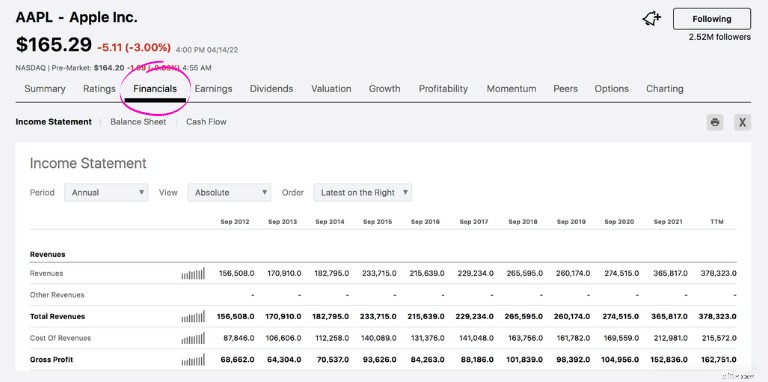
From there, you can either review the numbers or for a more visual approach, just hover over the line graph for each data set:
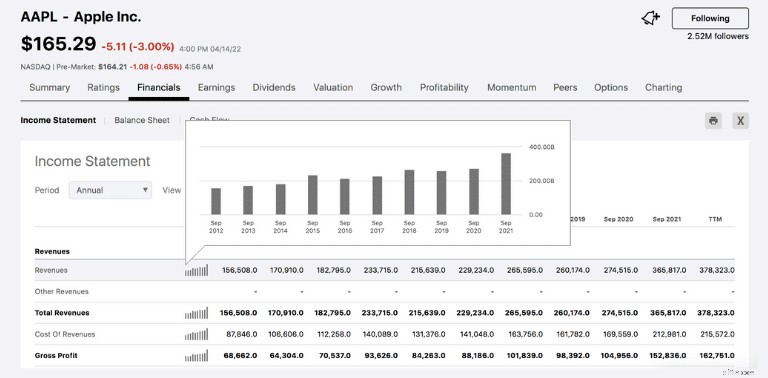
If you want to review the numbers in even more depth, you can click on the print icon or the “X” icon at the top, right of your screen to either print to PDF or download via Excel.
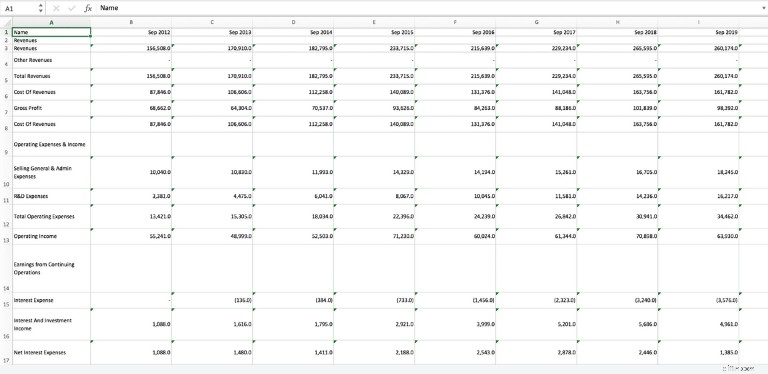
So depending on how in-depth you want to go, Seeking Alpha really gives you a lot of options to analyze your stocks.
Premium Plan Feature #19:Stock Performance Comparison Tool
Ever wonder how your current stocks compare to other stocks in the marketplace?
Take a look at the Stock Performance Comparison Tool – which is one of my favorite tools.
Just search your favorite stock and then click on the “Charting” tab.
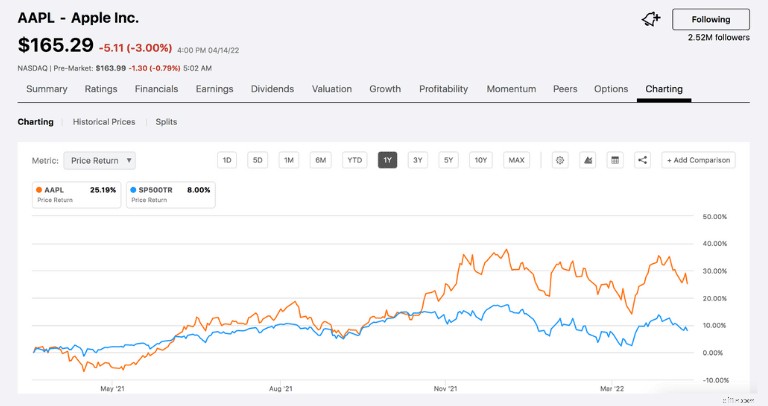
The default comparison is your stock (in this case, Apple) and the S&P 500.
However, if you want to know how apple is doing compared to another individual stock in the tech or a similar sector (like Tesla), then just click on the “+ Add Comparison” button and add your favorite stock:
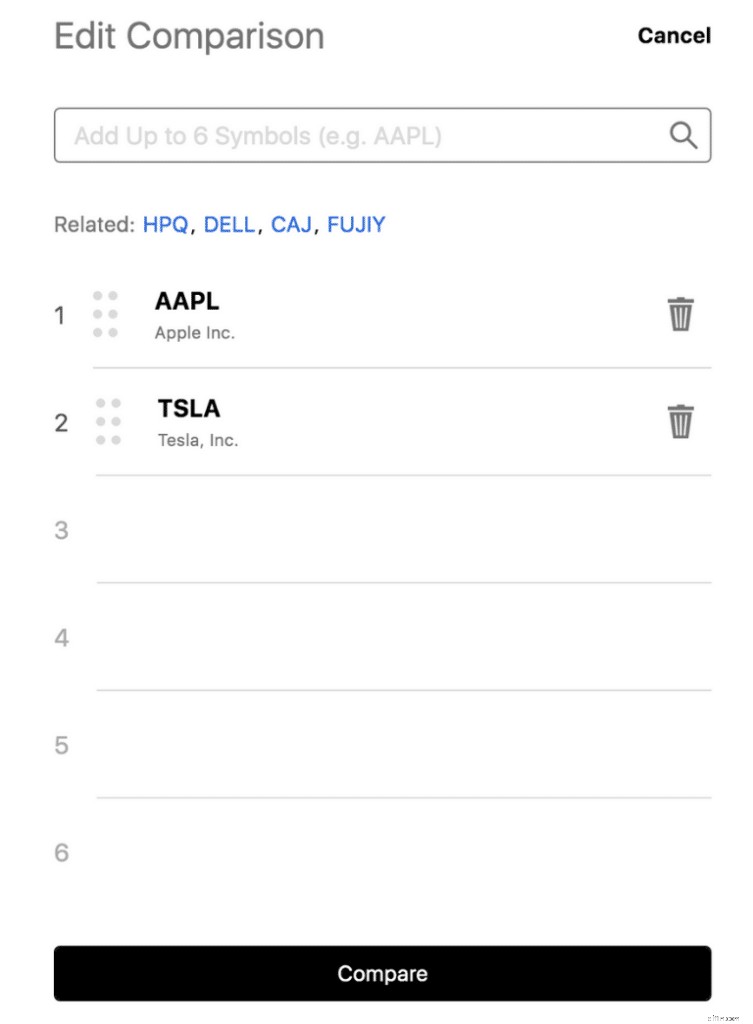
Now take a look at the comparison of Apple stock versus Tesla stock over the past 3 years:
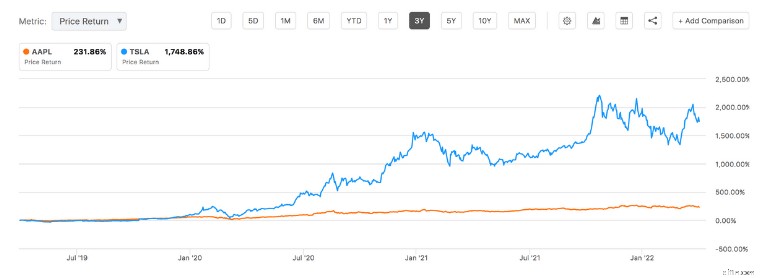
While this stock performance comparison chart shouldn’t be the only tool you should use to determine whether a stock is worth a purchase, it can certainly be a helpful guide.
Premium Plan Feature #20:Link Your Outside Investment Account
Lastly – but certainly not least – another cool feature with the Premium Tier is that you can link your outside investment accounts to your Seeking Alpha account.
Remember that you’ll receive access to Seeking Alpha’s quant comparison tool, the Wall St. Analyst ratings, and the SA Author rankings – along with customizing real-life alerts for each of the stocks you hold.
To start linking your outside accounts, just navigate to your main menu, hover over “My Portfolio” and then click on “Link Brokerage Account.”
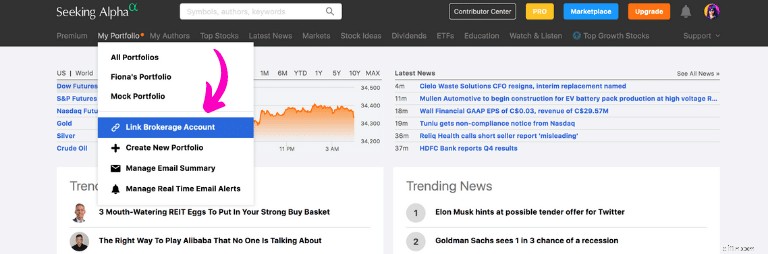
Any outside brokerage accounts that you link will be connected using the secured encryption software, known as Plaid.
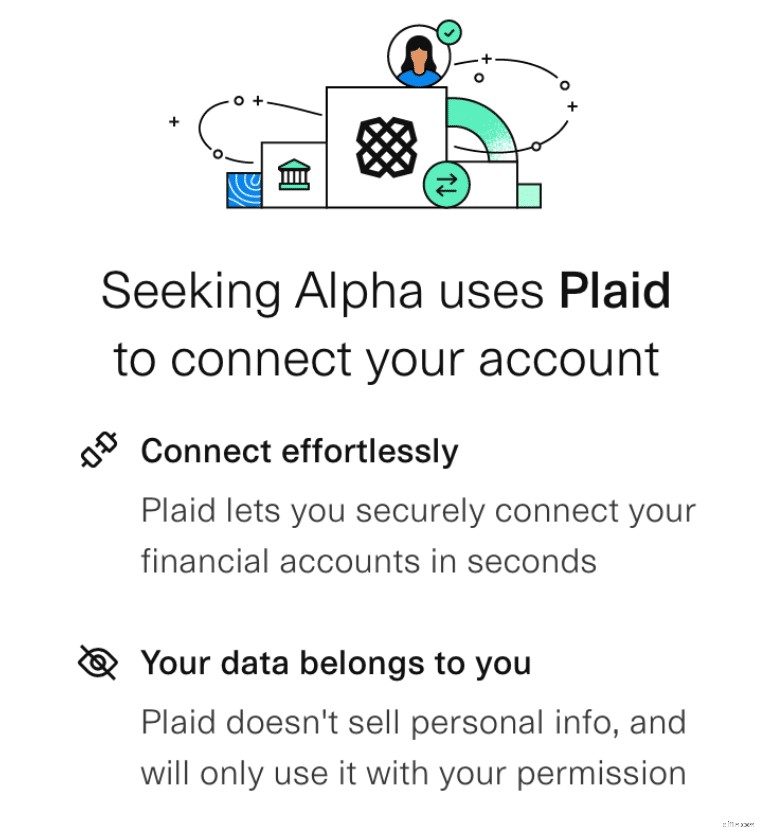
You can select a number of different brokers, such as:
- Ghiande
- Fedeltà
- Avanguardia
- Robinhood
- Charles Schwab
Even if you don’t see your brokerage firm immediately, you can either search for your brokerage firm or sometimes even input the information manually.
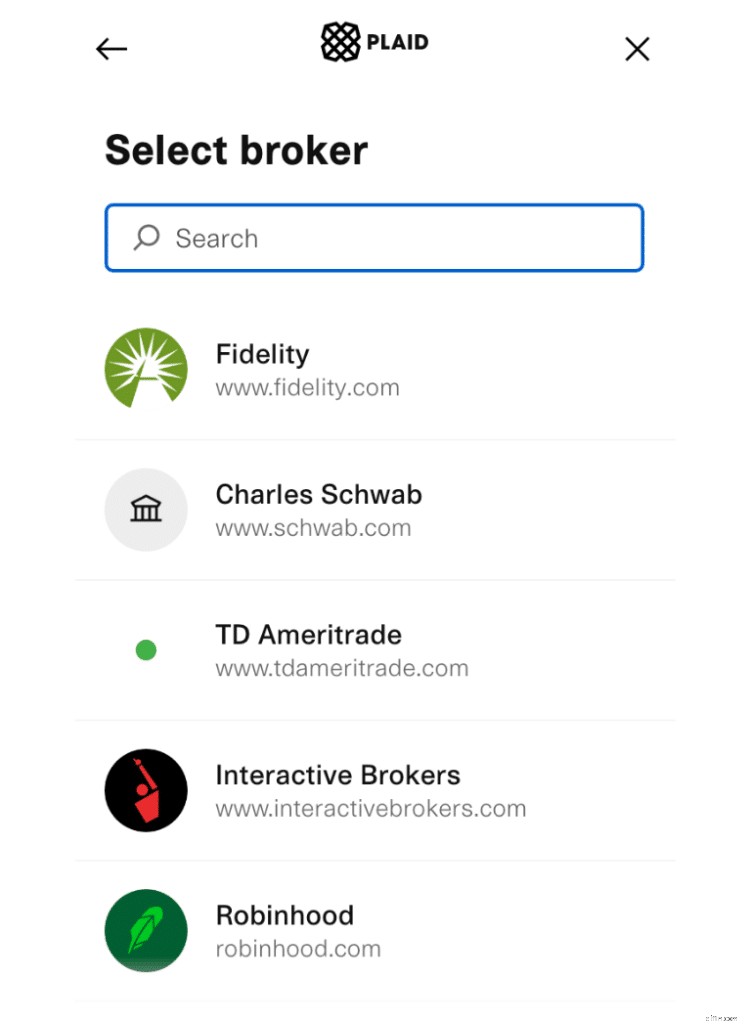
Once you’ve established a link to your brokerage account, you can do the following:
- Track your account value
- Sign-up for real-life stock alerts
- Assess the holdings in your accounts
- Aggregate your total liquid net worth in one place
Keep in mind that Seeking Alpha is an informational platform only – you cannot place investment trades on Seeking Alpha.
So to buy or sell stocks in your linked brokerage account, you’ll actually have to sign in to your own investment account.
Recommended Reading:Best Investment Apps
Is Seeking Alpha Premium Right for You?
Seeking Alpha Premium could be right for you if you:
- Enjoy fundamental research
- Want the latest stock market news
- Have some knowledge about investing
- Like to review in-depth stock analyses
- Want to be more involved in the portfolio allocation
Being a Premium Plan member myself, my favorite part is that you can use the Premium tier for as much or as little research as you want.
For example, if you’re thinking about adding Build-A-Bear Workshop, Inc. (BBW) to your portfolio, and you want some additional advice from industry experts.
In this case, just check out the BBW stock rankings in the Ratings Summary section.
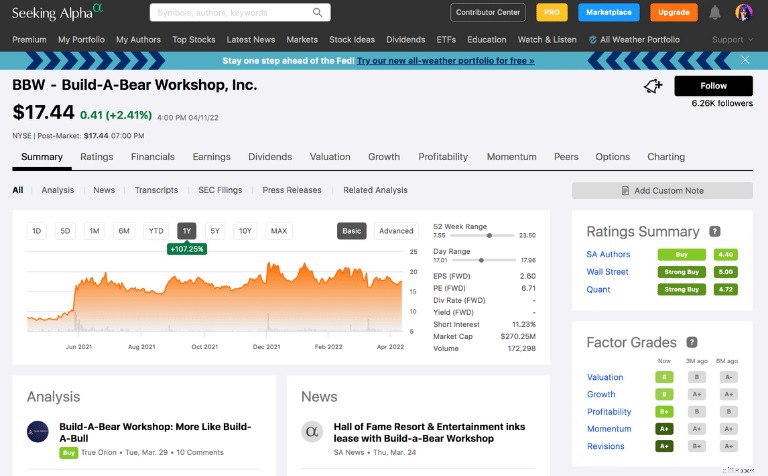
You’ll see that on 3 different instances, the BBW stock is considered a Buy to a Strong Buy opportunity:
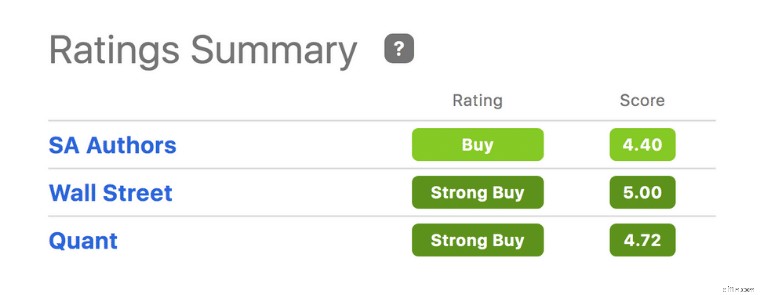
Now, if that’s all the reassurance you were looking for, you can move on and not look back.
However, if you want to drill into more depth with the Build-A-Bear Workshop, Inc. stock, Seeking Alpha lets you do as much fundamental analysis as you want.

La conclusione:
The Premium Plan gives intermediate investors the best of both worlds:Reassurance on which stocks to buy, hold, or sell while also going into as much analytical depth as possible.
Seeking Alpha Pro Plan
Just like the Premium Plan, you can also start a 14-day free trial period with the Seeking Alpha Pro Plan .
If you enjoyed the Pro Plan trial period, then you can pay for the Pro Plan in 2 ways:
Monthly Plan
$299.99/month
Annual Plan
$2,400 (or $199.99/month, as advertised)
It appears that the default case for Seeking Alpha is charging the full year’s worth of premiums upfront (so $2,400 in this case).
One of the best benefits to the Pro Plan is that you receive VIP access and Editorial Concierge, customized to your needs.
Keep reading to find out more about the key features of the Pro Plan.
Seeking Alpha Pro Features
In this section, I’ll explain in detail some of the top Pro Plan features and how you can benefit from each (keep in mind that the Pro Plan already comes with the Premium Plan features).
Below is an overview of the additional Seeking Alpha Pro Plan features:
- Ad Free
- Idea Screener
- VIP Editorial Concierge
- Pro content and newsletters
- Top Ideas Recommendation List
Pro Plan Feature #1:Ad-Free
With the Seeking Alpha Pro Plan, your entire user experience will be ad-free.
Remember that the Limited Access version does come with ads and the Premium version offers an ad-lite user experience.
Pro Plan Feature #2:Investment Screener
The Seeking Alpha Pro platform gives you the chance to be as specific as possible when filtering your investments.
You can filter your investments by:
- Investment style
- Geographic location
- Market capitalization
If you know what you’re doing and if you know what you’re looking for, then this investment screener can be used to your advantage.
Pro Plan Feature #3:VIP Editorial Concierge
If you want the bells, the whistles, and the exclusive VIP treatment, then you should consider the Pro Plan.
The editorial team works directly with Pro level subscribers to filter out and pinpoint ideas that fit to your investing needs, style, and preferences.
Pro Plan Feature #4:Pro Content and Newsletters
If you want daily short summaries of the top 1% of the Seeking Alpha content, then your Seeking Alpha Pro level subscription will give you that VIP treatment.
Pro Plan Feature #5:Top Ideas Recommendation List
As a Pro member, you’ll have Seeking Alpha’s industry experts send you a weekly list of their hand-picked top investment ideas from Seeking Alpha contributors.
Is Seeking Alpha Pro Right for You?
Seeking Alpha Pro could be right for you if you:
- Want VIP treatment
- Are an institutional investor
- Are an industry professional
- Make complicated trades (longs, shorts, puts, calls, etc.) and needs the in-depth analyses
Another neat feature is that you could also contribute to the Seeking Alpha community by writing an article with your research and opinion.
La conclusione:
The Pro Plan gives advanced investors and industry professionals an in-depth and resourceful experience when researching and analyzing stocks, funds, and ETFs.
Seeking Alpha Customer Service Review
I’ve personally reached out to Seeking Alpha’s customer service on 3 different occasions to evaluate their:
- Knowledge
- Friendliness
- Customer Experience
…And I must say that Seeking Alpha passed my test with flying colors.
Below is my evaluation:
Knowledge
⭐️⭐️⭐️⭐️⭐️
Friendliness
⭐️⭐️⭐️⭐️⭐️
Experience
⭐️⭐️⭐️⭐️⭐️
I’m drawing from my own personal experience from speaking with 3 different Seeking Alpha personal representatives.
The good news is that you can contact Seeking Alpha in 4 main ways:
contactus@seekingalpha.com
Social Media
– YouTube
Navigation Bar
Support Button
Phone Call
347-509-6837
Phone Support Center Hours
Monday to Friday 8am to 4pm EST (holiday hours may apply)
It’s reassuring for me to see the different ways you can contact Seeking Alpha.
While Seeking Alpha is not accredited with the BBB, I was still shocked to see the “F” rating on the BBB website:
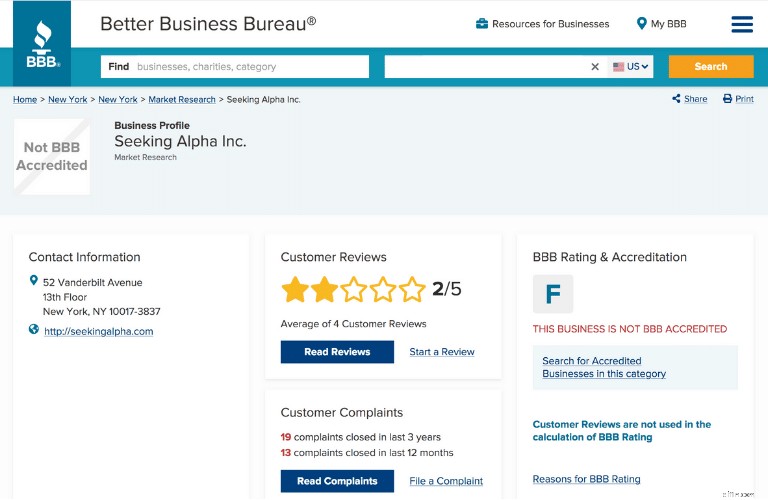
I even double-checked to see if I had the right Seeking Alpha company pulled up on my screen – and I did.
The common complaints appear to only apply to subscribers looking for the “free trial” period:
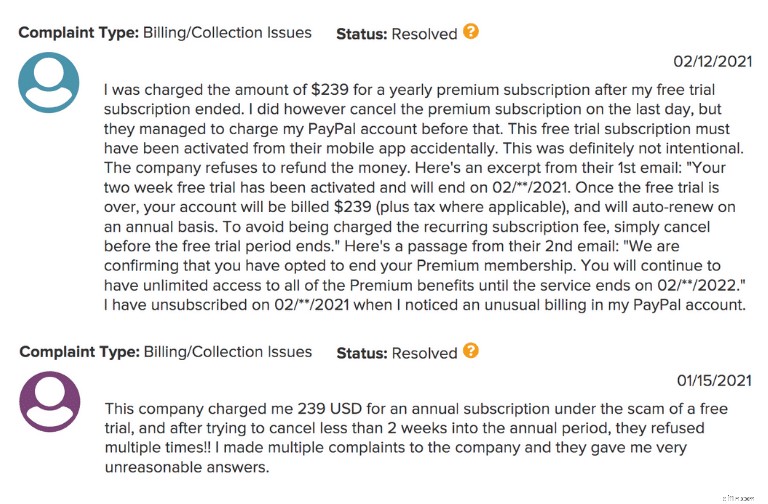
Based on these complaints (which are somewhat recent), it looks like many customers who signed up with the free trial period were charged after the period ended.
Based on this information, if I were signing up to the free trial period, I would probably triple check to read all of the fine print and possibly even cancel before the trial period is over (assuming you’re not happy with the platform).
Now that you have an idea of what people are unhappy about, let’s take a closer look at the ratings on TrustPilot, which is another customer review website.
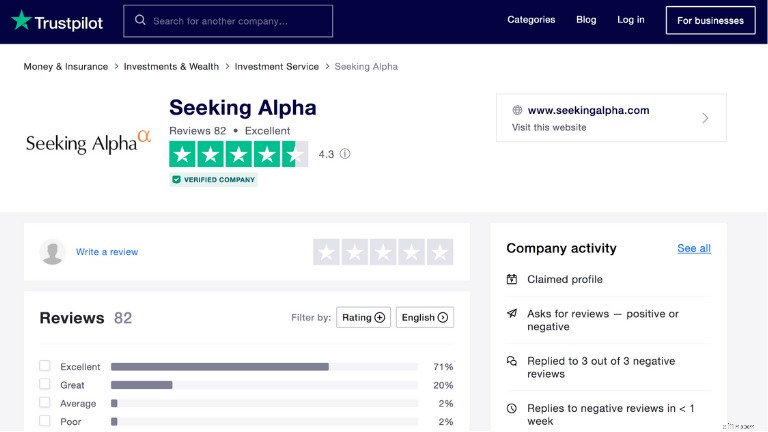
Now, this Trust Pilot customer review is more in line with what I was expecting to see.
On TrustPilot, a solid 93% of respondents rated Seeking Alpha average to excellent.
Some reviews are below:
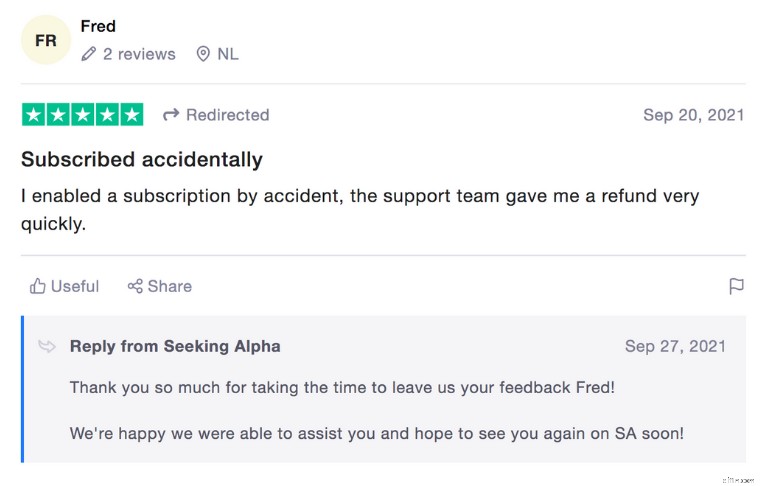
This review virtually contradicts the reviews from the BBB, which said Seeking Alpha did not offer a refund.
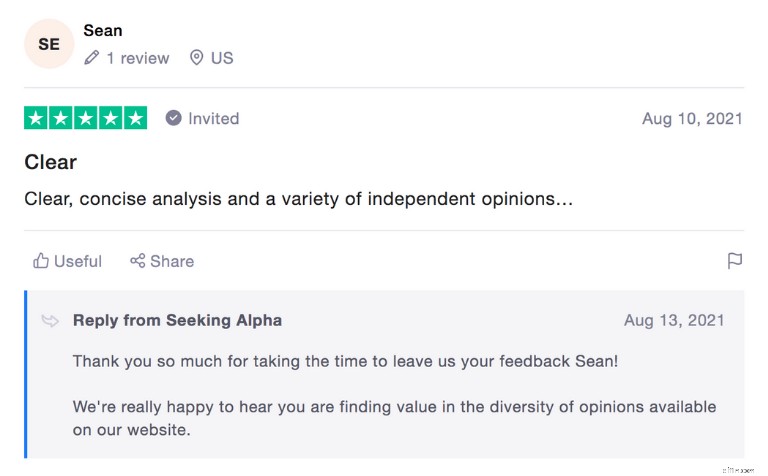
Above is another positive review about the accuracy and impartiality (no bias) of the authors that provide information on Seeking Alpha.
Of the 2 negative reviews that were posted from the 82 total reviews, the complaints were the following:
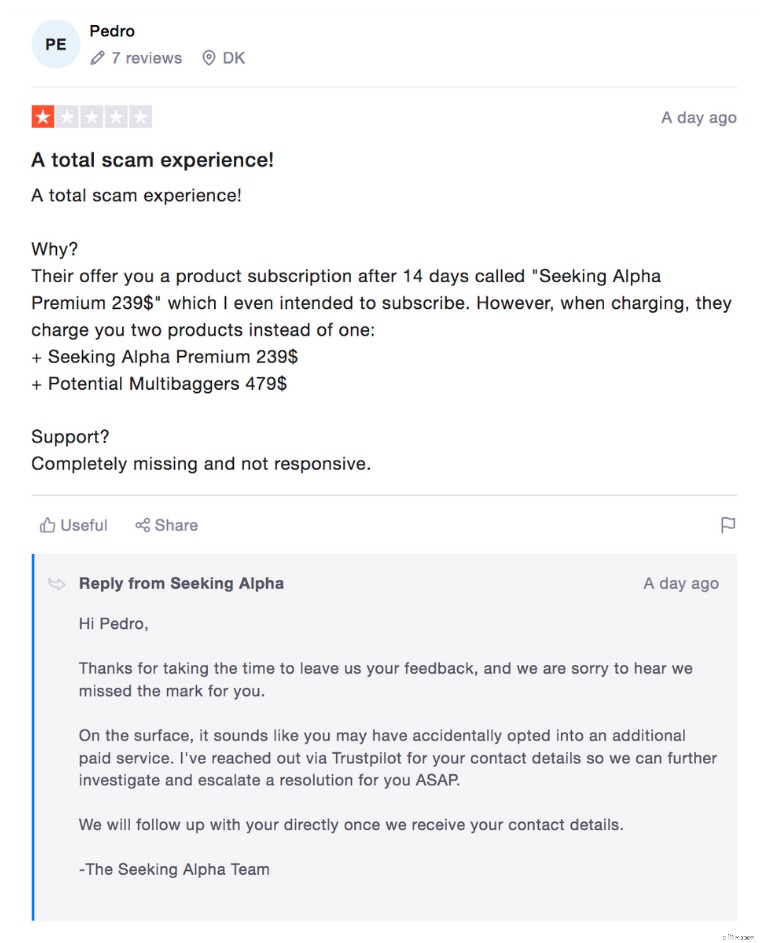
Take a look at the response time of when the negative review was posted (1 day ago) versus the reply from Seeking Alpha (also 1 day ago).
I thought that was impressive.
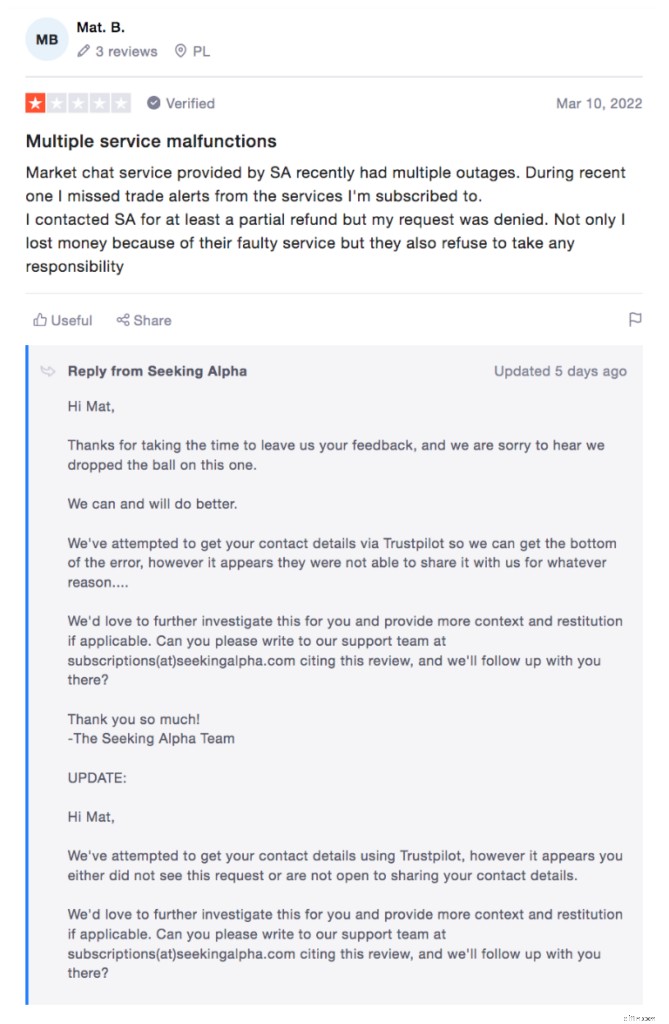
As you can see, there will always be good and bad reviews, and you’ll have to take the reviews with a grain of salt (seriously).
Personally, I like checking back into the customer service review platforms every few months, just to read updates.
La conclusione:
Most of the “Bad” Seeking Alpha reviews involve the free subscription service. According to the complaints, immediately after the free trial period ends, the consumer credit card will be charged the annual amount for a paid subscription (likely the Premium subscription).
The Author Vetting Process:Seeking Alpha’s Editors
Now it might sound daunting that Seeking Alpha offers works from 7,000 active monthly authors.
You might even be concerned about the quality of the information if there are so many contributors.
Their team has a pretty quick article turnaround time as well, which typically ranges between 1 hour to a few business days.
Do you have industry expertise and want to contribute?
Below are 9 of the most important requirements to pass the rigorous Seeking Alpha editorial review process:
Market-Oriented
Write about stocks, sectors, ETFs, or other actionable themes for US-based investors
High-Quality
Articles must be convincing, well-presented, and actionable
Fundamental Analysis
Articles must address factors such as a company’s competitors, products, management, corporate strategy, etc.
Originality
Always bring a new perspective to a topic
Compelling Title
Your title shouldn’t overpromise and underdeliver
Market Cap
Articles mentioning stocks trading at less than $1 or companies with market caps less than $100 million will receive extra scrutiny
Clean
You must proofread your article before submission
No Promotional Content
No promotional content in articles
Human Factor
Editors work closely with contributors and maintain a constructive dialogue
As you can see, there are a lot of requirements that go into the making and the publication of a Seeking Alpha article, so chances are that you’ll get the high quality you want.
And with each month, over 10,000 articles are published on Seeking Alpha!
Another neat thing is that you can view a contributor’s past track record of stock predictions.
Another trick to finding information from top ranked authors is just simply clicking on the “Top Authors” button.
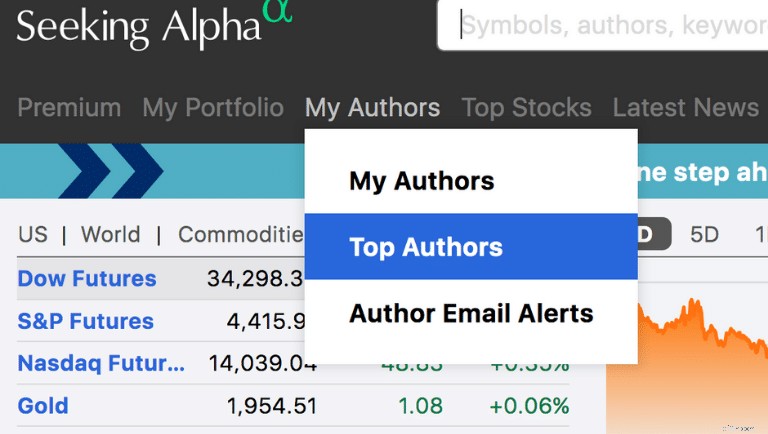
Once in the Top Authors section, you’ll receive a long list of author suggestions, based on their specialty (such as value investing, growth investing, oil &gas investing, etc.).
Seeking Alpha Educational Resources
Another reason why I’m a big fan of Seeking Alpha is because of the abundance of educational resources this platform offers its users:
Investment Videos
Access top investment news videos by clicking on the tab “Watch &Listen” and then clicking on “Videos”
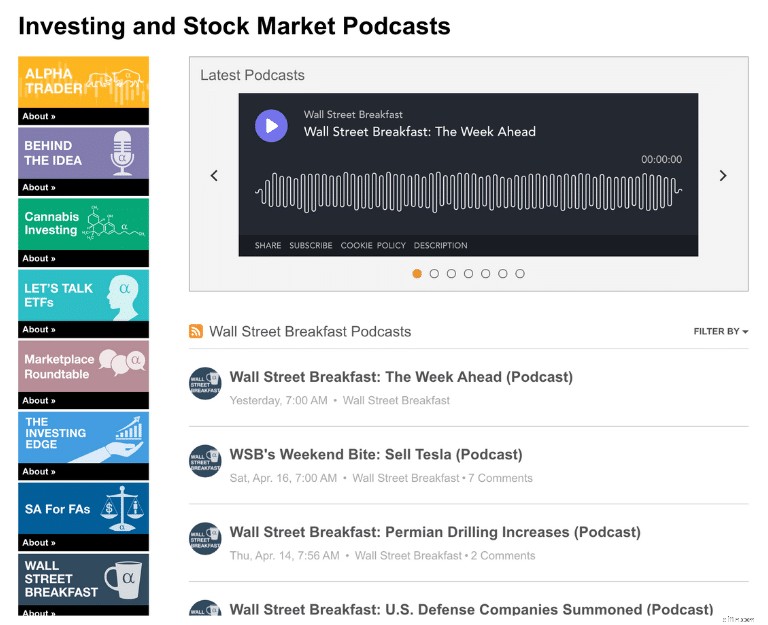
Investment Podcasts
Learn more about the latest investment news by accessing 8 Seeking Alpha podcasts. Click on “Watch &Listen” and then on “Podcasts”
Financial Planning Education
Seeking Alpha knows that investing is just a part of the financial planning process. When you click on the “Education” tab, you’ll gain access to a variety of different financial planning topics, ranging from cryptocurrency to 401(k) management
Seeking Alpha Knowledge Base
Type any question into the search box and you’ll probably find an answer. The Knowledge Base can be accessed by clicking on the “Support” icon and then “Knowledge Base”
Feedback Forum
If you ever have trouble with the Seeking Alpha desktop website or the mobile app, this is the place to share your concerns, feedback, and interact with other users. Access the forum by clicking on the “Support” icon and then “Feedback Forum”
As you can see, Seeking Alpha does not keep you in the dark – when it comes to investing or financial planning-related matters.
One of my favorite learning sections on Seeking Alpha is the “Education” section, where Seeking Alpha users can learn about more than just investing.
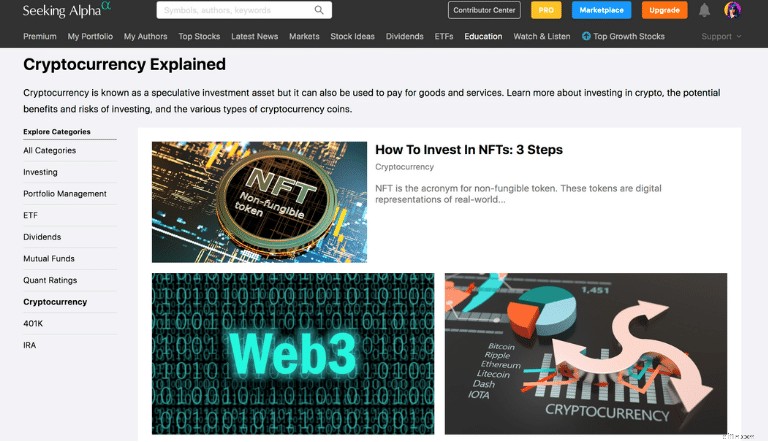
Under the education tab, you access articles about other topics that may not be covered in-depth by the Seeking Alpha Authors.
Some of these topics include:
- REITs
- 401(k)’s
- Cryptocurrency
- Capital gains taxes
I’m also a fan of the “Watch &Listen” section, which offers Seeking Alpha readers access to investment podcasts and videos.
If I’m ever stuck in traffic, I listen to one of the podcasts (I like the Wall Street Breakfast podcast).
The good news is that Seeking Alpha offers so much variety from which to choose – you’ll never be left without ideas.
How to Open a Seeking Alpha Account
Ready to open an account with Seeking Alpha?
Believe it or not, it’s actually a very fast and simple process.
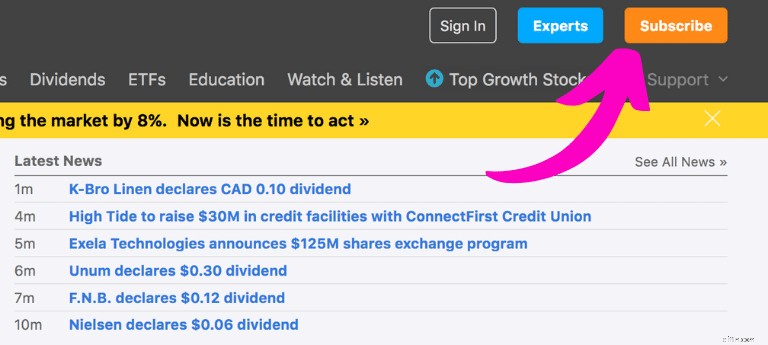
First, head to the Seeking Alpha website and click “Subscribe.”
After you click the subscribe button, you can choose to either start a free trial or register immediately with one of the 3 plans (Limited Access, Premium, or Pro).
Now, if you’re ready to register and pay for your subscription, then select your plan preference.
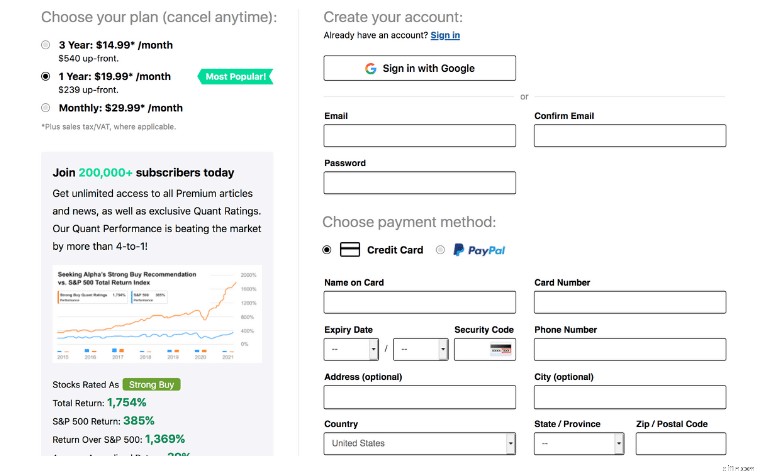
Payment methods are either via credit card or PayPal.
In my opinion, if you’re an investor who really wants to understand more about your investment holdings, then Seeking Alpha is probably a great platform for you.
Is Seeking Alpha Worth it?
Yes, Seeking Alpha is worth the cost if you do your own investment research and want to interact with experienced investors. For $19.99 per month, you get access to exclusive content from over 7,000 experienced investment authors, custom stock performance charts, and portfolio monitoring tools.
If you sign up to the Premium Platform, you can access the Seeking Alpha Quant Ratings, which have outperformed the market since 2010.
The Quant Ratings marked as “Very Bullish” for stocks were up 1,754% versus the market’s 385% gain.
On the other hand, the stocks that were rated as “Very Bearish” by Seeking Alpha really did underperform, being up by only 156% versus the market’s overall 385%.
While I’m not a fan of day trading and stock picking, if I am looking to buy or sell a stock or fund in my portfolio, Seeing Alpha would be my first stop before hitting that “trade” button.
Seeking Alpha Alternatives
Seeking Alpha might not be for everyone.
If you’re an active investor and just don’t like the investment research platform, then you may want to check out platforms like the Motley Fool’s Stock Advisor.
While the cost is certainly lower for new members ($99 per year), you also don’t get access to the customization, the tools, and the crowdsourcing that Seeking Alpha uses.
You can always sign up to the free version of each platform first before committing financially.
Domande frequenti
Is Seeking Alpha Reliable?
Based on Seeking Alpha’s track record, yes, Seeking Alpha is reliable. As an example, Seeking Alpha’s “Very Bullish” stock evaluation ratings have outperformed the market since 2010, up 1,754% versus the market’s 385% gain.
Is Seeking Alpha membership worth it?
Seeking Alpha’s Premium membership is absolutely worth the cost if you want to conduct your own investment research and interact with experienced investors.
You pay $19.99 per month in exchange for exclusive access to content from over 7,000 experienced investment authors, custom stock performance charts, and portfolio monitoring tools.
Is Seeking Alpha Premium worth it?
Yes, Seeking Alpha’s Premium membership is worth the cost if you do your own investment research and want to interact with experienced investors. For $19.99 per month, you get access to exclusive from over 7,000 experienced investment authors, custom stock performance charts, and portfolio monitoring tools.
Is Seeking Alpha still free?
You can still use Seeking Alpha as a free user under the Limited Access plan. However, you can unlock only 5 articles per month before being prompted to sign-up as a paying Premium member. The Premium membership costs $19.99 per month as of early 2022.
Is Seeking Alpha good for day trading?
Seeking Alpha is probably one of the best tools for day traders, active investors, and even swing traders. If you want to do your own investment research and learn from industry experts, then Seeking Alpha really is a good fit.
Who should not buy Seeking Alpha subscription?
If you aren’t a day trader or someone who enjoys researching and picking stocks for their portfolio, then Seeking Alpha is probably not for you. For example, passive investors who use mutual funds, index funds, or even ETFs probably won’t find too much value from the Seeking Alpha platform.
Who Created Seeking Alpha?
Seeking Alpha was founded by David Jackson in 2004. Jackson is a graduate of Oxford University (undergraduate) and The London School of Economics (graduate).
He worked as a technology research analyst at Morgan Stanley, where Jackson saw a problem (the conflict of interest stemming from investment banks publishing information about the products they sell) and developed a solution with the unbiased Seeking Alpha platform.
Seeking Alpha Review:The Bottom Line
Seeking Alpha is likely one of the best platforms if you want to:
- Research your own stocks
- Get the latest stock market news
- Customize your stock performance
- Receive live stock push notifications
- Learn from and interact with industry experts
In my opinion, the biggest benefit you get from Seeking Alpha is the unbiased research.
For example, you won’t find research articles about funds written by the very company that sells the same fund.
There is no conflict of interest with Seeking Alpha, just pure authenticity and knowledge shared by industry experts.
You can access Seeking Alpha through 3 plans:
- Limited Access Plan
- Premium Plan
- Pro Plan
If you’re really planning to use Seeking Alpha as a way to evaluate your portfolio, research stocks, and learn (and interact) with investment industry experts, then you’ll probably want to sign up with the Premium Plan .
The Premium Plan offers the following features:
- Gain exclusive &unlimited access to expert articles
- Brainstorm your next stock picks with investment professionals
- Accurate and reliable stock recommendations (from both authors and Seeking Alpha’s quantitative analysis)
- Customize and compare your stock performance against a peer’s performance
- Track and learn more about your personal portfolio’s allocation and performance
The list really does keep going, but you get my point.
The Premium Seeking Alpha plan offers a lot of benefits, and that’s the plan that I’m using myself right now.
La conclusione:
What I really like about Seeking Alpha is that this investment research platform truly is a democratized platform that shares quality ideas and insights from industry experts.
Now I’d like to hear from you:
What are your thoughts on Seeking Alpha?
Would you consider opening an account with this platform?
Let me know in the comments section below.
-

Consigli per la pensione:7 modi per far durare i tuoi soldi
Molte persone si preoccupano di rimanere senza soldi in pensione. questo è comprensibile, poiché non sappiamo quanto vivremo, quali potrebbero essere i nostri costi futuri e che tipo di rendimenti pos
-

Qual è il peso filippino (PHP)?
Il Peso filippino si riferisce alla valuta ufficiale delle Filippine ed è rappresentato dal codice ISO PHP. Il Bangko Sentral ng Pilipinas (BSP), la banca centrale delle Filippine, conia e stampa le b
Articoli in Evidenza
- Aggiornamento dello stimolo:un mercato del lavoro sano rende meno probabile il quarto controllo dello stimolo
- 7 modi per proteggere il tuo 401(k) da COVID-19
- Finanziariamente solida:cosa significa e come arrivarci
- Poni queste 4 domande prima di prestare denaro a un amico
- Dovresti acquistare la tua prossima auto da un rivenditore tradizionale o online?
- Aggiornamento dello stimolo:se il pagamento del credito d'imposta per i tuoi figli è stato inferiore questo mese, Questo potrebbe essere il motivo
- 7 lezioni di denaro che possiamo imparare da Jay-Z
- Cosa fare se stai lottando con i pagamenti del prestito studentesco
- 4 problemi secondari che possono aiutarti a raggiungere i tuoi obiettivi finanziari per il 2022
- 5 cose da considerare prima di acquistare una casa quando sei single
-
 4 settori su cui medita il saggio degli investimenti
 Samit Vartak fondato SageOne amore puro per gli investimenti azionari nel 2012. I servizi di gestione del portafoglio con sede a Pune si rivolgono agli Ultra HNI sia per gli investitori nazionali c...
-
 Come cambiare il mio indirizzo gratuitamente
 Quando ti sposti da una residenza allaltra, è una buona idea compilare un modulo di cambio di indirizzo, noto anche come modulo PS 3575. La compilazione di uno di questi moduli avvisa lufficio postale...